
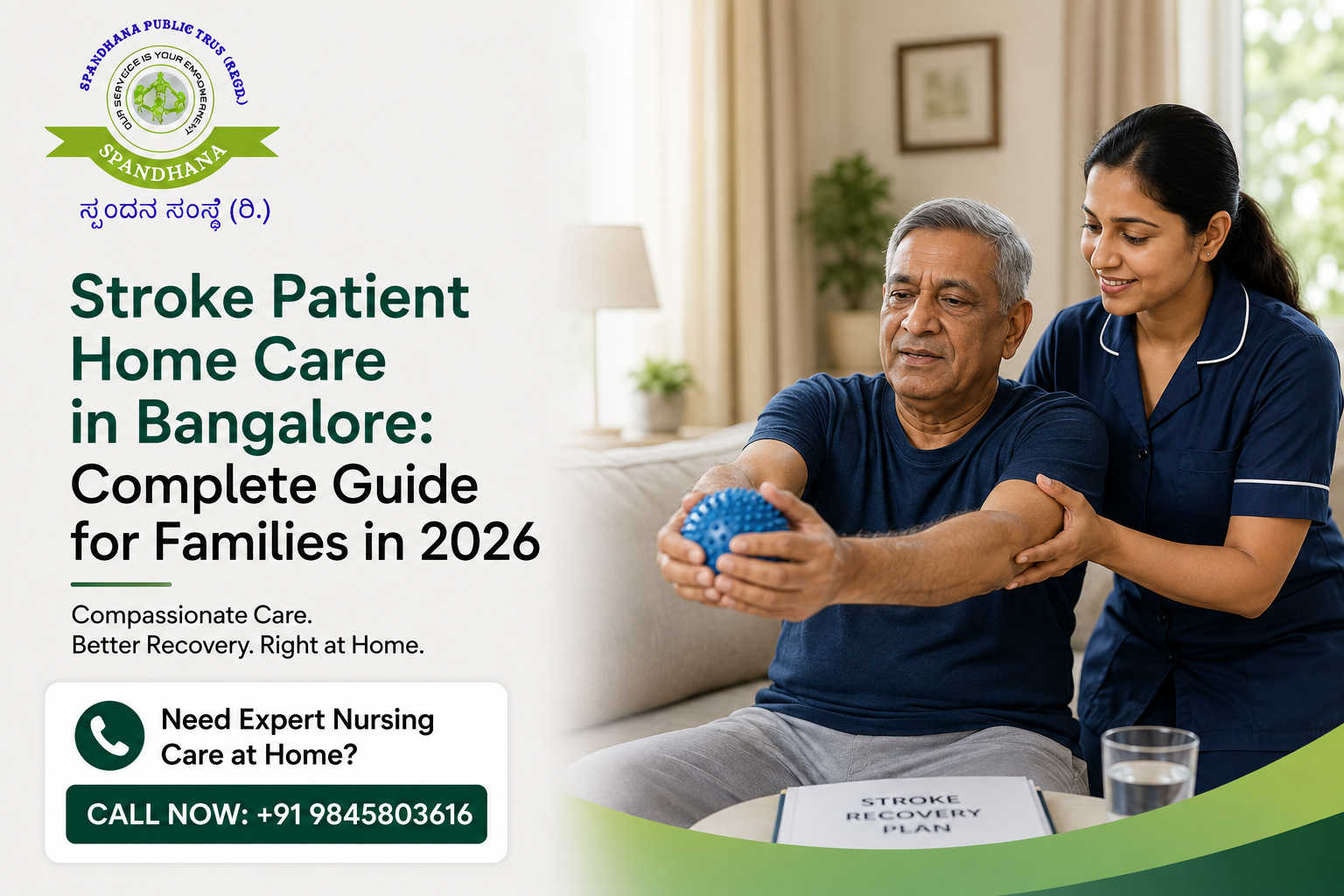
Bringing a loved one home after a stroke can be an emotional emotional crossroad. Families are suddenly thrust into a complex world of mobility challenges, dietary adjustments, and continuous supervision. Balancing work commitments, personal responsibilities, and dedicated caregiving often leaves family members feeling exhausted and overwhelmed. Understanding how to structure stroke patient home care in Bangalore is essential for adult children caring for an aging parent, spouses stepping into full-time caregiving roles, and working professionals managing care logistics.
Navigating post-stroke care requires a grounded strategy. From setting up home safety measures to building a daily routine and coordinating clinical therapy, having the right support system in place ensures your loved one receives safe, continuous assistance. This comprehensive guide covers everything families need to know—including establishing daily routines, managing home rehabilitation, avoiding home care pitfalls, and accessing local caregiver support in areas like HSR Layout.
The First Few Days at Home Can Feel Overwhelming
A stroke can suddenly change how a family manages everyday life. Returning home from the hospital brings immediate questions regarding bathing, feeding, mobility transfers, toileting, medication schedules, positioning, and safety supervision.
Rehabilitation is an essential part of long-term recovery, which often involves a clinical team of physiotherapists, occupational therapists, speech and language therapists, and psychological support professionals. However, day-to-day survival at home relies heavily on basic practical care. A patient helper or caregiver supports routine daily care, personal hygiene, and physical safety, but they do not replace a doctor, nurse, or licensed therapist. For families navigating this transition, Spandhana Public Trust provides compassionate home care for stroke patients across Bangalore to help bridge the gap between hospital discharge and long-term home recovery.
One-Minute Summary: What Families Need to Know
-
What Stroke Home Care Means: Practical daily living support combined with clinician-guided rehabilitation to help survivors recover comfortably at home.
-
Who Needs a Patient Helper: Bedridden patients, partially paralyzed individuals, or elderly stroke survivors who cannot safely manage daily activities independently.
-
Daily Assistance Includes: Personal hygiene, mobility transfers, feeding support, medication reminders, positioning, and fall prevention.
-
Why Home Safety Matters: Modifying living spaces dramatically reduces the risk of secondary injuries and accidental falls.
-
Rehabilitation Alignment: Daily caregiving must support—not replace—the structured treatment plan set by your treating medical team.
-
Emergency Awareness: Home care should never delay emergency medical treatment.
-
How Spandhana Public Trust Helps: Provides verified, experienced caregivers to assist families with non-clinical daily living tasks.
Need Help Caring for a Stroke Survivor at Home? Call Spandhana Public Trust: +91 9845803616
What Happens After a Stroke? Understanding the Home-Care Journey
Why the Transition from Hospital to Home Can Be Difficult
Transitioning from a monitored hospital environment to a residential setup presents immediate practical challenges:
-
Reduced Mobility & Weakness: Partial or total paralysis (hemiplegia) limits independent movement.
-
Communication Barriers: Aphasia or dysarthria makes expressing basic needs difficult.
-
Swallowing Problems: Dysphagia increases risks during meal times.
-
Emotional Changes: Frustration, anxiety, and depression are common following sudden independence loss.
The World Health Organization (WHO) identifies swallowing difficulties, speech disorders, spasticity, pressure ulcers, contractures, and gait problems among common stroke complications. Recognizing these hurdles early helps families prepare adequately.
Why Recovery Looks Different for Every Patient
There is no fixed timeline for stroke recovery. Outcomes vary considerably depending on stroke severity, the brain regions affected, underlying health conditions, and consistency of post-stroke patient care. Some survivors regain full independence within months, while others require continuous assistance with daily tasks.
Who May Need Stroke Patient Home Care in Bangalore?
-
Elderly Parents Recovering After a Stroke: Seniors who require structured daily assistance to regain strength safely.
-
Spouses Caring for a Stroke Survivor: Partners who need physical relief from round-the-clock heavy lifting and personal hygiene duties.
-
Bedridden or Partially Paralyzed Patients: Individuals requiring continuous repositioning to prevent bedsores and assist with transfer movements.
-
Working Professionals: Adult children balancing full-time careers while managing care logistics for aging parents.
-
NRI Families: Relatives living abroad who require dependable local care support for parents residing in Bangalore.
What Does Stroke Patient Home Care Include?
A clear understanding of caregiver scope helps families manage expectations effectively.
| Daily Care Need | Possible Home-Care Support |
| Mobility | Assisted walking, physical transfers (bed to chair), and balance support. |
| Personal Hygiene | Assistance with bathing, grooming, oral care, and toileting. |
| Feeding | Meal assistance according to prescribed dietary consistencies. |
| Positioning | Regular body repositioning to promote comfort and prevent pressure sores. |
| Bedridden Care | Continual monitoring, skin assessment support, and linen changes. |
| Medication | Timely reminders strictly following family/medical instructions. |
| Companionship | Emotional support, conversation, and mental stimulation. |
| Safety | Constant supervision to minimize fall risks. |
| Family Communication | Regular daily updates regarding observations and progress. |
Daily Stroke Care Routine at Home: Morning to Night
Establishing a routine builds stability for stroke survivors. Below is a structured sample schedule:
Morning Routine
-
Assist with gentle waking, oral hygiene, and warm bathing.
-
Complete skin checks during clothes changing.
-
Assist with breakfast according to prescribed feeding guidelines.
-
Provide medication reminders.
-
Support mobility or transfer to a comfortable sitting position.
Afternoon Routine
-
Rest and nap period to prevent fatigue.
-
Assisted lunch and hydration according to medical advice.
-
Help with prescribed passive exercises or speech practice.
-
Provide routine update to primary family care manager.
Evening Routine
-
Light mobility work or supported indoor walking.
-
Assisted dinner and oral hygiene.
-
Evening medication reminders.
-
Transition to comfortable loungewear.
Night Routine
-
Prepare bedroom setup for safety and easy accessibility.
-
Assist with night-time toileting.
-
Final position check to ensure joint alignment and skin protection.
Stroke Rehabilitation at Home vs. Patient Care: What’s the Difference?
Understanding the distinction between clinical rehabilitation and everyday caregiving ensures your loved one receives comprehensive support.
| Patient Helper / Caregiver | Rehabilitation Professional (PT / OT / SLP) |
| Focuses on daily personal assistance. | Focuses on clinical physical recovery. |
| Assists with mobility, transfers, and safety. | Implements structured physical therapy protocols. |
| Manages bathing, grooming, and toileting. | Provides functional retraining and strength exercises. |
| Helps with regular feeding routines. | Conducts formal swallowing and speech therapies. |
| Delivers ongoing companionship and observation. | Assesses clinical progress and modifies treatment plans. |
Managing stroke recovery while balancing work and family life can quickly lead to caregiver burnout. Professional home-care support gives your family an extra pair of trained hands. Speak to Spandhana Public Trust today at +91 9845803616 to discuss home-care support options.
How to Make a Home Safer for a Stroke Patient
The WHO explicitly recognizes environmental modification as a key factor in improving post-stroke independence and reducing fall risks.
Reduce Fall Hazards
-
Clear walkways of clutter, loose cords, and furniture obstacles.
-
Ensure adequate lighting in hallways and stairwells.
-
Remove loose throw rugs or secure them with non-slip backing.
-
Keep essential items within easy reach of the patient’s strong side.
Make the Bedroom Safer
-
Position the bed at a height that allows the patient’s feet to rest flat on the floor when sitting.
-
Ensure adequate lighting next to the bed.
-
Clear a wide transfer path between the bed and bathroom door.
Bathroom Safety
-
Install non-slip rubber mats inside shower areas.
-
Place sturdy grab bars near the toilet and shower area.
-
Provide continuous physical supervision during bathing.
Feeding, Swallowing & Nutrition: What Families Should Know
Many stroke survivors experience dysphagia (difficulty swallowing), which can lead to serious complications such as aspiration pneumonia if unmanaged.
-
Never Assume Normal Swallowing is Safe: Observe for coughing, throat clearing, or a wet-sounding voice during meals.
-
Follow Prescribed Diets Strictly: Adhere closely to speech therapist recommendations regarding food texture (pureed, soft) and fluid consistency (thickened liquids).
-
When to Contact Medical Teams: Seek clinical guidance immediately if the patient experiences persistent coughing during meals, unexplained fever, or weight loss.
How Families Can Support Mobility Without Taking Unnecessary Risks
-
Transfer Assistance: Always support the patient’s weaker side during transfers, using proper body mechanics to protect your back.
-
Walking and Balance: Use gait belts or recommended mobility aids (walkers, quad canes) rather than pulling on weak arms.
-
Positioning: Reposition bedbound patients every two hours to relieve pressure points.
-
Follow Professional Guidance: Only assist with exercises explicitly demonstrated by your treating physical therapist. Never force stiff or painful joints.
How to Choose the Right Stroke Home-Care Service in Bangalore
Use this checklist when evaluating care providers:
-
Experience: Verify experience in handling stroke-specific care needs.
-
Verification: Ensure background checks and identity verifications are completed.
-
Scope of Work: Clarify exact daily care duties included in the service.
-
Backup Coverage: Confirm procedures for caregiver replacements during absences.
-
Shift Options: Check for flexible 12-hour or 24-hour shift availability.
-
Communication: Confirm how daily care logs and family updates are managed.
-
Exclusions: Clearly establish non-clinical boundaries upfront.
10 Questions to Ask Before Hiring a Stroke Caregiver
-
What specific experience do you have with post-stroke care?
-
How do you assist bedridden or heavily dependent patients?
-
What safety techniques do you use during physical transfers?
-
What personal care duties are included in daily shifts?
-
Are your caregivers background-verified?
-
What is the process if an assigned caregiver is unwell or on leave?
-
Do you offer both day/night shifts and 24-hour care options?
-
How are daily observations communicated to family members?
-
What protocols do caregivers follow during a medical emergency?
-
Can service levels adjust as the patient’s needs change over time?
Warning Signs That Require Medical Attention
When to Contact the Patient’s Doctor
-
Mild skin redness over pressure points.
-
Gradual mood changes or persistent loss of appetite.
-
Minor changes in muscle stiffness.
When to Seek Emergency Medical Care
-
Sudden weakness or numbness in the face, arm, or leg.
-
Sudden confusion, trouble speaking, or difficulty understanding speech.
-
Sudden visual disturbances in one or both eyes.
-
Sudden loss of balance, dizziness, or difficulty walking.
-
Severe, unexplained headache.
How Spandhana Public Trust Supports Families After Stroke
Spandhana Public Trust provides compassionate, patient-focused daily assistance tailored to stroke survivors across Bangalore. Services focus on preserving patient dignity while relieving family strain through:
-
Focused assistance with hygiene, transfers, and feeding routines.
-
Compassionate support for elderly and bedridden individuals.
-
Flexible scheduling designed around family routines.
-
Consistent communication with primary family care contacts.
Stroke Patient Home Care in HSR Layout: Local Support for Families
For families residing in HSR Layout, arranging localized care support significantly reduces administrative stress. Having reliable home care nearby simplifies routine setup, ensures punctual shift transitions, and minimizes travel complications for fragile stroke survivors. Spandhana Public Trust delivers localized support to families in HSR Layout and extends services across all major neighborhoods in Bangalore.
We Provide Services Across All Areas of Bangalore
Spandhana Public Trust provides compassionate home-care services across all areas of Bangalore. Whether your loved one is recovering from a stroke, living with mobility limitations, or requires ongoing assistance with daily activities, our team is committed to making dependable home-care support accessible to families throughout the city.
Need stroke care at home? Call Spandhana Public Trust today at +91 9845803616.
Frequently Asked Questions
1. How can I care for a stroke patient at home in Bangalore?
Establish a secure home environment, follow clinician recommendations, maintain strict medication schedules, and hire trained patient helpers for non-clinical daily living support.
2. What support does a stroke patient need after hospital discharge?
Patients typically require mobility assistance, personal hygiene care, swallow-safe meal preparation, fall prevention measures, and regular clinical rehabilitation sessions.
3. Can a stroke patient receive professional care at home?
Yes, families can combine clinical home visits (physiotherapy, nursing) with daily non-clinical caregiver assistance to manage ongoing recovery comfortably.
4. What does a stroke patient caregiver do at home?
Caregivers help with non-clinical tasks such as bathing, dressing, assisted walking, meal feeding, hygiene maintenance, and continuous safety observation.
5. How do I choose a reliable stroke caregiver in Bangalore?
Look for providers offering background-verified staff, clear communication protocols, clear boundary definitions between clinical and practical care, and reliable backup arrangements.
Your Loved One Deserves Dignity, Patience & Support
Watching a parent or spouse work through stroke recovery can be emotionally taxing. Balancing work obligations, personal life, and home care often leaves family members feeling stretched to their limits. You do not have to shoulder every physical and logistical responsibility on your own. Engaging reliable, compassionate home assistance helps protect your loved one’s dignity while giving your family space to rest and recover together.
Contact Spandhana Public Trust today:
 Contact Spandhana Public Trust Today: +91 9845803616
 Book Trusted Home Nursing Services in Bangalore
 Visit Us: HSR Layout, Bangalore