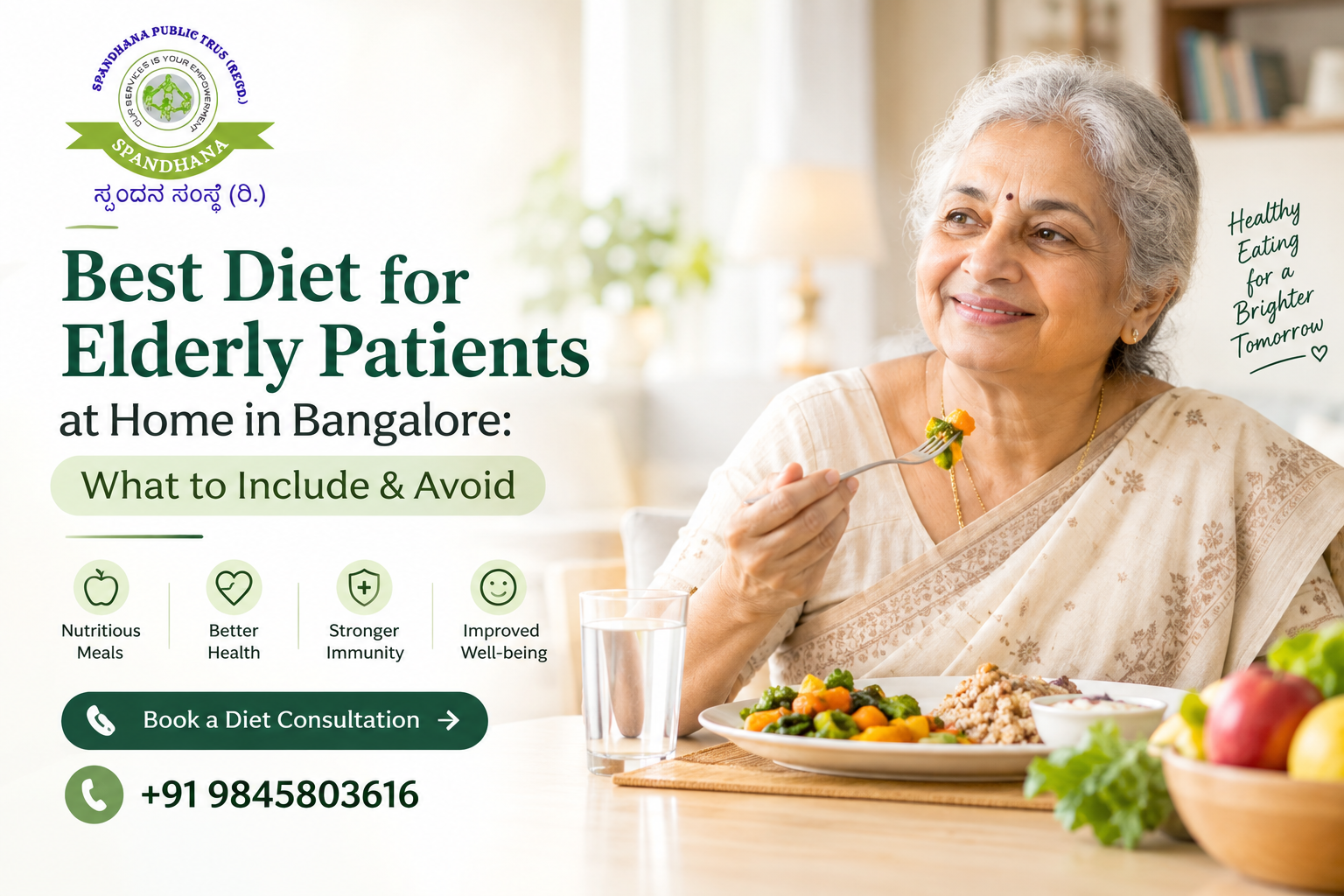
Caring for an ageing parent often brings quiet, unexpected challenges. You might notice your mother leaving half her meal untouched, or your father suddenly declining foods he used to love because they are too tough to chew. Watching a loved one grow weaker, lose their appetite, or struggle with daily meals is deeply worrying. Many families assume that eating less is simply a natural part of growing old. However, elderly nutrition is not about cutting back portions, it is about maximizing nourishment in every bite.
Understanding how to structure a balanced diet for elderly patients at home in Bangalore (whether in HSR Layout, Indiranagar, Koramangala, or beyond) is essential for maintaining their muscle strength, immune function, and overall quality of life. This guide outlines what to include, what to limit, how to adapt food textures, and how structured daily support can make caregiving more manageable.
At Spandhana Public Trust, we provide compassionate home-care support across Bangalore to assist families in managing daily care routines, medication schedules, and nutritional consistency for their senior loved ones.
1-Minute Summary
Here is a quick-reference summary of dietary choices for home-based senior care:
| Include More Often | Limit / Avoid |
| Protein-Rich Foods (Dal, pulses, paneer, eggs, soft chicken/fish) | Excess Salt (Pickles, papads, packaged chips, instant soups) |
| Cooked Vegetables (Spinach, gourds, carrots, pumpkin) | Sugary Foods & Drinks (Sweets, carbonated beverages, canned juices) |
| Seasonal Fruits (Papaya, banana, stewed apples, oranges) | Deep-Fried Foods (Pakodas, pooris, heavy samosas) |
| Whole Grains (Oats, ragi, dalia, soft khichdi, brown rice) | Highly Processed Foods (Preservative-heavy ready meals) |
| Dairy Products (Fresh curd, warm milk, buttermilk) | Excessively Spicy Foods (If prone to acid reflux or indigestion) |
| Adequate Hydration (Warm water, clear soups, tender coconut water) | Hard/Unmodified Textures (If chewing or swallowing is impaired) |
Need Help Caring for an Elderly Family Member at Home? Contact Us Today: +91 9845803616
Why Nutrition Becomes More Important as People Age
Ageing causes subtle physiological changes that directly affect how the body processes, desires, and utilizes food.
Appetite and Taste Can Change With Age
Seniors frequently experience a decline in appetite. Reduced physical activity, slower metabolism, and changes in olfactory (smell) and gustatory (taste) perception make food less appealing. Furthermore, common long-term medications for hypertension, diabetes, or joint pain can alter taste perception or induce mild nausea, leading to skipped meals.
Chewing and Swallowing Can Affect Food Choices
Dental challenges, such as missing teeth, ill-fitting dentures, or reduced salivary flow (dry mouth), make chewing hard, fibrous, or dry foods painful. The Indian Dental Association notes that chewing and swallowing difficulties and dental problems often cause elderly individuals to avoid nutrient-dense items like protein sources, raw fruits, and vegetables, widening nutritional gaps.
For seniors suffering from dysphagia (difficulty swallowing), unmonitored meal textures can pose serious risks of coughing, choking, or aspiration.
Muscle Loss Makes Protein Important
Sarcopenia, the age-related loss of skeletal muscle mass and strength, accelerates if protein intake drops. Unlike younger adults who need calories primarily for energy, seniors require adequate, high-quality protein to preserve muscle mass, maintain mobility, prevent falls, and support immune response.
What Should Be Included in an Elderly Diet?
A balanced home diet for seniors in Bangalore should prioritize nutrient density, soft textures, and familiar local ingredients.
       [ 🍽️ The Balanced Senior Meal Framework ]
  +---------------------------------------------------+
  |  1. Protein Source (Dal, Paneer, Eggs, Curd)      |
  |  2. Cooked Vegetables / Leafy Greens              |
  |  3. Whole Grains (Ragi, Oats, Dalia, Rice)        |
  |  4. Hydrating Fluids (Water, Buttermilk, Soups)   |
  +---------------------------------------------------+
1. Protein-Rich Foods
Protein preserves lean muscle and aids tissue repair. Excellent everyday options include:
-
Dals and Pulses: Yellow moong dal, masoor dal, and soft-cooked chana dal.
-
Dairy: Fresh curd (dahi), paneer, and warm milk (which also promote gut health and provide calcium).
-
Eggs & Lean Proteins: Boiled or scrambled eggs, soft-poached fish, and minced chicken for non-vegetarian seniors.
-
Plant Proteins: Tofu and well-cooked soy chunks.
2. Vegetables and Leafy Greens
Vegetables supply vital micronutrients and dietary fiber to manage age-related constipation:
-
Soft-cooked gourds (bottle gourd, ridge gourd, ash gourd).
-
Carrots, pumpkin, and steamed beetroot.
-
Leafy greens like spinach (palak), thoroughly cooked and mashed or pureed if necessary.
3. Fruits for Vitamins, Minerals, and Fibre
Fruits bolster immunity and aid digestion. Soft, naturally sweet choices include:
-
Papaya, ripe bananas, and sapota (chikoo).
-
Stewed or peeled apples and pears.
-
Oranges and sweet lime (mosambi) for Vitamin C.
(Note: Portion sizes should be tailored for seniors with diabetes).
4. Whole Grains and Balanced Carbohydrates
Carbohydrates provide steady daily energy. Opt for easily digestible, complex grains:
-
Ragi (Finger Millet): Porridge or soft ragi malt (rich in calcium and fiber).
-
Oats & Dalia (Broken Wheat): Excellent for smooth, warming breakfast porridges.
-
Soft Rice & Khichdi: Moong dal khichdi provides a complete, light amino acid profile.
5. Calcium-Rich Foods
NITI Aayog’s guidelines on elderly nutrition highlight calcium and Vitamin D as critical nutrients for preventing bone density loss and fractures. Incorporate daily servings of curd, milk, ragi, and sesame seeds (in paste form).
6. Healthy Fats in Appropriate Amounts
Unsaturated fats support brain health and joint lubrication:
-
Powdered or soaked nuts (almonds and walnuts).
-
Small amounts of ghee, groundnut oil, or mustard oil for cooking.
What Foods Should Elderly Patients Limit or Avoid?
Minimizing certain foods prevents inflammation, blood pressure spikes, and digestive distress.
   [ ⚠️ Foods to Limit ]              [ 🚫 Textural Hazards ]
  • Pickles & Papads (High Salt)    • Dry, crumbly biscuits
  • Deep-fried snacks (Samosas)     • Large, tough meat cuts
  • Sugary beverages & sweets       • Whole, hard nuts & seeds
Foods High in Salt
National and international dietary guidelines (including WHO-aligned Indian nutrition protocols) recommend limiting daily sodium to regulate blood pressure and reduce fluid retention. High-sodium foods to limit include:
-
Commercial pickles (achaar) and papads.
-
Processed packaged snacks, chips, and canned soups.
Deep-Fried and Very Oily Foods
Deep-fried items like pakodas, pooris, and fried snacks slow down gastric emptying, leading to acid reflux, bloating, and indigestion in older adults.
Excess Sugar and Sugary Drinks
Carbonated beverages, artificial juices, and excessive sweets cause rapid blood sugar fluctuations and offer zero structural nourishment.
Foods That Are Difficult to Chew or Swallow
Avoid serving hard, dry, or crumbly foods (such as whole nuts, dry biscuits, or tough meats) to seniors with dental or swallowing issues. ESPEN (European Society for Clinical Nutrition and Metabolism) guidelines emphasize formal swallowing evaluations and individualized texture modifications (e.g., pureeing, mashing, or thickening liquids) for older adults with dysphagia to prevent aspiration pneumonia.
How to Create an Elderly Diet Plan at Home
Creating a sustainable meal schedule relies on simplicity, consistency, and texture management.
Build Every Main Meal Around 4 Components
Combine Protein + Cooked Vegetable + Soft Grain + Fluid:
-
Breakfast: Soft oats porridge with milk OR idli with sambar and fresh curd.
-
Lunch: Soft rice or phulka, dal, steamed gourd vegetable, and curd.
-
Evening: Warm soup or fruit puree with a light snack.
-
Dinner: Comforting moong dal khichdi with a spoon of ghee and soft-cooked vegetables.
Prefer Smaller, Manageable Meals When Needed
Large portions can intimidate seniors with reduced appetites. Serving 5 to 6 small, nutrient-dense meals throughout the day proves far more effective than forcing three heavy meals.
Sample One-Day Diet Plan for an Elderly Patient
This chart offers a practical template using regional South and North Indian home foods:
| Time | Example Meal Option | Key Nutritional Benefit |
| Early Morning | Warm water / Mild cumin water | Digestive kickstart |
| Breakfast | 2 soft Idlis with Sambar OR Steamed Vegetable Dalia | Complex carbs & light protein |
| Mid-Morning | Bowl of ripe papaya or stewed apple puree | Fibre & Vitamin C |
| Lunch | Soft Rice/Roti + Moong Dal + Pumpkin Sabzi + Fresh Curd | Balanced protein, fiber & probiotics |
| Evening | Warm Vegetable Soup OR Ragi Malt | Easy hydration & calcium |
| Dinner | Soft Moong Dal Khichdi + Steamed Spinach | Light, easily digestible night meal |
| Bedtime | Small glass of warm milk with a pinch of turmeric | Promotes restful sleep & joint health |
Important Clinical Note: This sample chart is a general educational reference. Seniors managing diabetes, chronic kidney disease (CKD), cardiovascular conditions, or acute dysphagia require personalized dietary plans supervised by their treating physician or a registered dietitian.
Hydration: The Part of Elderly Nutrition Families Often Miss
Dehydration is one of the most frequent reasons elderly patients are hospitalized for confusion, urinary tract infections (UTIs), and constipation.
Why Seniors May Not Drink Enough Water
As people age, the brain’s thirst-sensation mechanism weakens. Seniors often simply do not feel thirsty, even when dehydrated. Mobility constraints or fear of frequent bathroom trips (especially at night) also lead many to deliberately limit their liquid intake.
Simple Ways Caregivers Can Encourage Fluids
-
Serve small sips of water regularly throughout the day rather than large glasses all at once.
-
Offer hydrating alternatives like buttermilk (tashte/chaas), clear vegetable broths, and tender coconut water.
-
Note on Medical Guidance: Always check with a physician if the patient has heart failure or kidney disease, as strict fluid caps may apply.
How Diet Changes for Bedridden or Weak Elderly Patients
Bedridden or frail seniors have unique physiological demands. Lower physical activity means fewer calories are burned, yet their need for vitamins, minerals, and muscle-repairing protein remains high.
       [ 📋 Daily Caregiver Health & Nutrition Checklist ]
  [ ] Consumed at least 4-5 small meals/snacks today?
  [ ] Achieved adequate fluid intake (water, soups, buttermilk)?
  [ ] Any coughing, choking, or throat-clearing during meals?
  [ ] Is weight stable? (Check for loose-fitting clothing)
  [ ] Bowel movements regular and without discomfort?
Practical Care Strategies
-
Focus on Nutrient Density: Make every mouthful count. Add ghee to dal, mix powdered nuts into porridges, or use paneer in soups.
-
Choose Easy-to-Eat Proteins: Offer soft scrambled eggs, smooth dals, blended paneer, or well-curdled yogurt.
-
Recognize Warning Signs: If you notice persistent poor appetite, unexplained weight loss, choking while drinking liquids, or extreme lethargy, consult a medical professional immediately.
How Medical Conditions Can Change an Elderly Diet
Generic meal plans often fall short when age-related health conditions are present:
-
Diabetes: Requires strict portion control of carbohydrates, elimination of refined sugars, and emphasis on low-glycemic index foods.
-
High Blood Pressure: Demands strict sodium monitoring, avoiding papads, pickles, and packaged sauces.
-
Kidney Disease: Requires clinical management of protein, potassium, sodium, and phosphorus intake under direct nephrology supervision.
-
Swallowing Difficulties (Dysphagia): Textures must be carefully adjusted (pureed, soft-minced, or liquid-thickened) to avoid aspiration into the lungs.
How Family Caregivers Can Make Healthy Eating Easier
For working professionals in Bangalore balancing demanding careers with elderly care at home, maintaining meal consistency can feel overwhelming.
-
Meal Preparation: Batch-cook and store foundational ingredients (like boiled dals, vegetable purees, and idli batter).
-
Accessibility: Keep water flasks and soft healthy snacks within easy reach of your parent’s bed or armchair.
-
Coordinate With Professional Caregivers: When work commitments prevent you from being at home for every meal, a trained home caretaker ensures your parent eats on schedule, stays hydrated, and takes their medications correctly.
What Makes Spandhana Public Trust’s Elderly Home Care Support Different?
At Spandhana Public Trust, we understand that proper nutrition relies on consistent daily care routines.
-
Dedicated Daily Care: Our trained home caregivers assist seniors with timely meal presentation, feeding assistance, and routine hydration tracking.
-
Support for Bedridden Patients: Experienced caregivers manage gentle positioning, mobility support, and mealtime supervision for weak or bedridden seniors.
-
Family Peace of Mind: We keep working family members informed about their parent’s daily food intake, weight stability, and overall well-being.
When Should You Talk to a Doctor or Dietitian?
Contact a healthcare professional if you observe any of the following red flags:
-
Sudden or unintentional weight loss (e.g., clothes becoming noticeably loose).
-
Persistent refusal to eat or drink for more than 24 hours.
-
Frequent coughing, gagging, or choking during or after meals.
-
Signs of dehydration (dry mouth, sunken eyes, dark urine, or sudden confusion).
Frequently Asked Questions
What is the best diet for elderly patients at home?
The best diet for elderly patients at home is nutrient-dense, easily digestible, and tailored to their specific health conditions. It should emphasize high-quality proteins (dals, curd, eggs, paneer), cooked vegetables, whole grains (oats, ragi, soft rice), and consistent daily hydration while adapting textures to suit chewing and swallowing abilities.
What foods should elderly patients include and avoid?
Seniors should include soft protein sources, leafy vegetables, seasonal fruits, and whole grains. They should limit high-sodium snacks (pickles, papads), deep-fried foods, refined sugars, and hard foods that pose chewing or choking hazards.
What should an elderly patient eat for breakfast?
Ideal Indian elderly breakfast options include warm oats porridge cooked with milk, soft idlis with sambar, ragi malt, or vegetable dalia upma. These choices provide smooth textures, easy digestion, and sustained energy.
How can I create an elderly patient diet chart at home?
Build meals around a simple framework: combine one protein source, one cooked vegetable, one easily digestible grain, and an adequate fluid. Divide daily nutrition into 5 to 6 small meals if your parent struggles with large portions.
How can caregivers help elderly patients maintain proper nutrition?
Caregivers support senior nutrition by preparing soft, appealing foods, establishing a regular meal schedule, offering fluids proactively, and providing patient feeding assistance when mobility or hand tremors make eating difficult.
Good Elderly Nutrition Starts With Consistent Daily Care
Nutritional care for an ageing parent is an expression of love, respect, and dignity. Preventing nutritional gaps, muscle loss, and dehydration requires daily routine and patient support. When professional and personal responsibilities pull you in multiple directions, you do not have to carry the caregiving journey alone.
Providing your parent with structured, compassionate daily assistance ensures their golden years are comfortable, healthy, and safe.
Get in Touch With Spandhana Public Trust Today
 Contact Spandhana Public Trust Today: +91 9845803616
 Book Trusted Home Nursing Services in Bangalore
 Visit Us: HSR Layout, Bangalore