
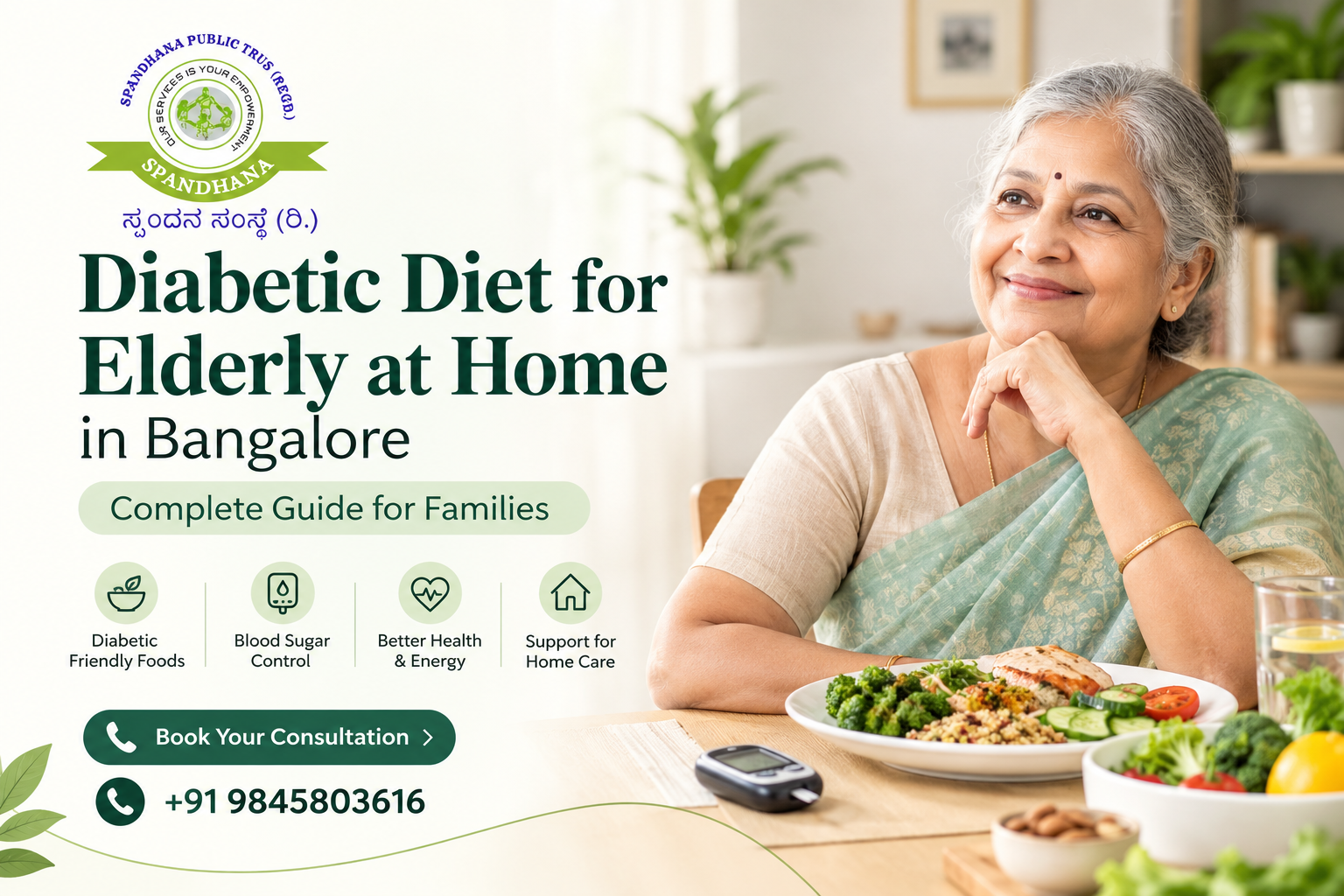
Caring for an aging parent with diabetes is rarely as simple as following a standard food chart. Families often face a complex daily balancing act, managing a diabetic diet for elderly at home in Bangalore while dealing with low appetite, chewing difficulties, muscle loss, hypertension, or multiple daily medications. Many adult children wonder: What can I safely cook? How much should be served? Do traditional South Indian staples like rice, idli, or ragi need to be eliminated entirely?
Managing diabetes in seniors is not about harsh food deprivation or removing every traditional food from the kitchen. The real goal is providing balanced, practical, and individualized nutrition that keeps blood sugar steady while preserving strength, dignity, and quality of life. Whether you are an adult child living in HSR Layout, a busy working professional balancing career and caregiving, or an NRI supporting aging parents from abroad, this complete guide provides actionable steps to ensure your parents receive proper nutritional care at home.
At Spandhana Public Trust, we have supported families with dedicated home-care and elderly support needs across Bangalore. We understand that practical diet planning is one of the most critical daily challenges caregivers face.
1-Minute Summary: What Families Need to Know
- Prioritize Balance Over Restriction
- Anchor Carbs with Protein & Fibre
- Protect Muscle Mass
- Opt for Whole Fruits
- Never Alter Medications Independently
- Tailor to Individual Needs
Need help caring for an elderly parent with diabetes at home?Call Spandhana Public Trust: +91 9845803616
Why Elderly People With Diabetes Need a Different Approach to Food
A generic diabetes diet meant for a middle-aged adult often fails when applied to an 80-year-old parent. Senior care requires a distinct approach because age-related physiological changes significantly alter how the body processes food.
Age, Appetite, and Muscle Loss
As people age, digestion slows and metabolic rates drop. Seniors frequently experience reduced appetite, age-related taste changes, and chewing or swallowing difficulties. This can lead to unintentional weight loss, muscle wasting (sarcopenia), and frailty. For a senior with a healthy diet for elderly with diabetes, aggressive calories cutting or severe carbohydrate restrictions can lead to severe malnutrition and increased fall risks rather than better health.
Diabetes Plus Other Health Conditions
Dietary management becomes more complex when diabetes coexists with other medical conditions:
-
Chronic Kidney Disease (CKD): Requires careful monitoring of protein, potassium, and phosphorus.
-
Hypertension & Heart Disease: Demands controlled sodium levels and heart-healthy fats.
-
Cognitive Decline or Dementia: May cause seniors to forget meals or struggle with self-feeding.
-
Post-Illness Recovery: Demands increased energy and protein density to repair tissue.
What Should Elderly Diabetic Patients Eat at Home?
When planning meals, focus on wholesome, easily digestible foods that deliver steady energy without causing abrupt blood sugar spikes.
Vegetables and Fibre-Rich Foods
Non-starchy vegetables should form the foundation of most meals. Fibre slows down carbohydrate absorption and supports gut health:
-
Leafy Greens: Spinach (palak), amaranth (dantu), fenugreek (methi).
-
Local Gourds: Bottle gourd (sorakaya), ridge gourd (heerekai), ash gourd, bitter gourd (karela).
-
Cruciferous & Other Veggies: Cabbage, cauliflower, carrots, beans, cucumber, and capsicum.
Protein-Rich Foods
Protein is essential to preserve muscle mass and keep seniors strong:
-
Vegetarian Sources: Yellow moong dal, masoor dal, cooked chickpeas, paneer, and fresh curd/yogurt.
-
Non-Vegetarian Options: Eggs, steamed or poached fish, and soft lean chicken.
Better Carbohydrate Choices
Carbohydrates do not need to be eliminated, but choice and portion control matter:
-
Whole grains like ragi (finger millet), foxtail millet, oats, and whole wheat.
-
Brown rice or hand-pounded rice in controlled portions, paired with double the volume of cooked vegetables and dal.
Whole Fruits in Appropriate Portions
Whole fruits provide vital antioxidants and fibre. Serve small, fresh portions of low-glycemic fruits like guava, green apples, papaya, or berries. Avoid fruit juices, as straining removes the fibre and causes rapid blood glucose spikes.
Diabetic Food Chart for Elderly: What to Prefer and What to Limit
| Food Group | Prefer More Often | Limit / Be Careful With |
| Vegetables | Non-starchy vegetables, leafy greens, gourds | Large portions of potato, sweet potato, tapioca |
| Protein | Moong dal, curd, eggs, paneer, steamed fish | Highly processed meats, deep-fried pakoras/nuggets |
| Grains | Ragi, oats, brown rice, whole-wheat roti | Refined flour (maida), white bread, bakery biscuits |
| Fruits | Small portions of whole papaya, guava, apple | Fruit juices, canned fruits in syrup, dried fruit in excess |
| Snacks | Roasted chana, walnuts, almonds, cucumber slices | Packaged namkeen, fried samosas, sugary snacks |
| Drinks | Water, buttermilk (majje), unsweetened lemon water | Soft drinks, packaged juices, heavily sweetened tea/coffee |
How to Plan a Diabetic Meal for an Elderly Parent
To make daily care straightforward, use the Spandhana 3-Step Meal Method:
-
Balance: Fill half the plate with non-starchy cooked vegetables, one-quarter with a clean protein source, and one-quarter with a whole-grain carbohydrate.
-
Portion: Use small bowls (katoris) to standardize servings and avoid accidental overeating of grain portions.
-
Consistency: Serve meals and snacks at predictable times each day to reduce the risk of hypoglycemia (low blood sugar), especially for seniors taking insulin or sulfonylureas.
The 3-Question Plate Check
Before serving any meal to an elderly parent, ask:
-
Does this plate contain a portion of cooked vegetables?
-
Is there a soft, digestible protein source included?
-
Is the carbohydrate portion controlled and unrefined?
7-Day Diabetic Diet Plan for Elderly at Home
Note: This sample meal plan is for educational guidance and is not a medical prescription. Customize menu items based on personal health needs and doctor recommendations.
| Day | Breakfast | Lunch | Evening Snack | Dinner |
| Day 1 | 2 Steamed Idlis + Vegetable Sambar | Whole-wheat Roti + Yellow Moong Dal + Palak Veg | Roasted Chana + Unsweetened Tea | Mixed Vegetable Soup + Paneer/Toffu |
| Day 2 | Vegetable Oats / Oats Upma | Small Portion Brown Rice + Fish/Dal Curry + Ridge Gourd | Soft Curd / Buttermilk | Roti + Lauki (Bottle Gourd) Sabzi |
| Day 3 | Ragi Porridge (unsweetened) or Ragi Dosa | Foxtail Millet + Toor Dal + Steamed Beans | Soaked Almonds & Walnuts | Vegetable Soupy Khichdi (Moong Dal) |
| Day 4 | Vegetable Dosa + Coconut-Chana Chutney | Roti + Egg Curry / Paneer Bhurji + Cucumber | Roasted Makhana | Roti + Methi Dal + Boiled Veggies |
| Day 5 | Vegetable Sevai / Rava Upma | Small Portion Rice + Sambar + Cabbage Sabzi | Small Whole Guava or Papaya | Soft Moong Dal Cheela with Veggies |
| Day 6 | Boiled Eggs / Paneer + 1 Toast | Jowar/Wheat Roti + Dal Makhani (light) + Bhindi | Thin Buttermilk (Majje) | Roti + Lauki Chana Dal Curry |
| Day 7 | Vegetable Uttapam + Sambar | Balanced Indian Thali (Roti + Small Rice + Dal + Veg) | Small Apple Slices | Light Broken-Wheat (Dalia) Veg Khichdi |
How Families Should Customize the Plan
Adjust the general meal pattern for specific health conditions:
-
For Kidney Disease: Adjust protein levels and limit high-potassium greens/salts as advised by the nephrologist.
-
For Chewing Problems: Mash dal and veggies thoroughly or blend them into soft soups.
-
For Bedridden Seniors: Focus on smaller, nutrient-dense portions to prevent bloat and constipation.
What Foods Should Elderly People With Diabetes Avoid or Limit?
Sugary Drinks and Sweetened Beverages
Avoid carbonated sodas, packaged fruit juices, energy drinks, and tea or coffee with added sugar. Liquid sugars bypass digestion rapidly, causing severe glycemic spikes.
Refined and Highly Processed Foods
Minimize refined white flour (maida), white bread, instant noodles, and commercial bakery products. These foods lack fiber and offer little nutritional value to frail seniors.
Sweets and Large Dessert Portions
Complete restriction can sometimes lead to stress or secret eating. Offer small bites of low-glycemic desserts on special occasions rather than large daily sweet portions.
Why “No Sugar” Is Not the Whole Solution
Simply removing table sugar is insufficient for effective diabetes management. A diet made entirely of white rice, refined bread, and fried snacks will still spike blood sugar levels even if zero sugar is added. Focus on the overall meal structure, protein intake, and fiber content.
Common Diabetes Diet Mistakes Families Make at Home
-
Removing All Carbohydrates: Carbohydrate elimination can cause fatigue, sudden hypoglycemia, and rapid weight loss in elderly parents.
-
Over-Serving Fruit Juices: Believing fresh juice is healthy, families serve large glasses that overload the body with fructose without natural fibre.
-
Relying on “Sugar-Free” Biscuits: Replacing real meals with commercial biscuits that contain high amounts of refined carbs and palm oil.
-
Ignoring Protein Needs: Serving only carbs and broths without dal, eggs, or curd, which accelerates muscle loss. (Current clinical guidelines recommend at least 0.8g to 1.2g of protein per kg of body weight daily for older adults with diabetes).
-
Adjusting Medications Independently: Altering diabetes medicine doses without consulting a doctor when a parent eats less.
Diabetic Diet for Bedridden, Weak, or Low-Appetite Seniors
Caregiving for bedridden or ailing seniors presents unique nutritional challenges:
-
Low Appetite: Serve 5–6 small, nutrient-dense mini-meals throughout the day instead of 3 large meals.
-
Chewing Difficulty: Provide soft textures, puréed lentils, mashed khichdi, soft paneer, or cottage cheese.
-
Swallowing Difficulty (Dysphagia): Do not attempt DIY food thickening without professional guidance. Seek a clinical evaluation, as improper food consistency can lead to lung aspiration.
-
Bedridden Care: Combine nutritional care with regular hydration, routine positioning to avoid pressure sores, and steady medication management.
When Diabetes Comes With Kidney Disease, BP, or Other Conditions
Single-condition diets rarely apply to seniors. When managing multiple chronic diseases:
-
Diabetes + Kidney Disease: Avoid high-potassium foods or heavy protein loading without nephrology clearance.
-
Diabetes + Hypertension: Limit sodium, avoid canned foods, and use natural herbs and spices for flavor.
-
Diabetes + Multiple Medications: Time meals precisely around medication and insulin schedules to prevent low blood sugar events.
How Caregivers Can Monitor an Elderly Diabetic Parent at Home
Keep this daily monitoring checklist near your parent’s meal area:
-
Meal Timing: Are meals served at consistent daily intervals?
-
Portion Intake: Did the senior finish their protein and vegetable portions?
-
Blood Sugar Logging: Are blood glucose readings recorded as advised by the doctor?
-
Medication Adherence: Were prescriptions given on time relative to meals?
-
Hydration Check: Has the senior had adequate water and liquid intake throughout the day?
-
Symptom Watch: Are there signs of weakness, unusual sweating, dizziness, or confusion.
Diabetic Diet Support in HSR Layout: Home-Care Assistance
If you notice that your parent is skipping meals, struggling with medications, or losing weight, professional home care can provide peace of mind.
Signs Your Family May Need Home-Care Support:
-
You cannot consistently supervise meal preparation and feeding.
-
Your elderly parent repeatedly forgets meals or medications.
-
Managing mobility, hygiene, and diet simultaneously is overwhelming.
-
You live away from home or balance demanding work hours.
How Spandhana Public Trust Supports Families
Spandhana Public Trust provides comprehensive elderly care, home nursing, and caretaker support services across Bangalore, including HSR Layout. Our caregivers assist with:
-
Timely feeding and daily care support.
-
Routine monitoring of vital signs and glucose logs.
-
Medication reminders and companionship.
-
Dedicated home care for post-hospitalization or bedridden seniors.
Call Spandhana Public Trust: +91 9845803616
Why Families Choose Spandhana Public Trust
-
Established Experience: Dedicated to supporting families with reliable home-care solutions across Bangalore since 2001.
-
Tailored Care Plans: Services adapted to working children, NRI families, and seniors needing long-term or post-hospitalization assistance.
-
Local Presence: Prompt, responsive home-care assistance in HSR Layout and neighboring districts.
Frequently Asked Questions
What is the best diabetic diet for elderly people at home?
The best diet prioritizes balance rather than severe food restrictions. It includes fiber-rich vegetables, adequate protein (dal, paneer, curd, eggs), and controlled portions of unrefined complex carbohydrates served at consistent meal times.
What should elderly diabetic patients eat at home?
Elderly diabetic patients should eat non-starchy vegetables, legumes, whole grains (ragi, oats, brown rice), curd, paneer, eggs, and small portions of whole fresh fruits like guava or papaya.
What foods should elderly people with diabetes avoid?
Limit sugary beverages, fruit juices, refined flour (maida), heavily fried snacks, commercial sweets, and highly processed packaged foods that cause sudden blood sugar spikes.
Is a 7-day diabetic diet plan safe for every elderly person?
No single meal plan suits every senior. Dietary requirements must be adjusted based on kidney health, blood pressure, chewing ability, appetite, activity level, and prescribed diabetes medications.
Can elderly diabetic patients eat rice?
Yes, elderly diabetic patients can eat rice in moderation. Match small portions of rice with equal or double servings of cooked vegetables and protein sources like dal or curd to prevent high blood sugar spikes.
Final Takeaway: Good Diabetes Care Is About More Than Removing Sugar
Diabetes care for an elderly parent should never feel like a punishment. Proper nutrition should help your parent eat comfortably, maintain energy, protect muscle strength, and live safely in their own home.
When you care for an aging parent, every meal is an expression of care and respect. If busy work schedules, distance, or complex medical needs make daily management difficult, you do not have to handle it alone.
 Contact Spandhana Public Trust Today: +91 9845803616
 Book Trusted Home Nursing Services in Bangalore
 Visit Us: HSR Layout, Bangalore