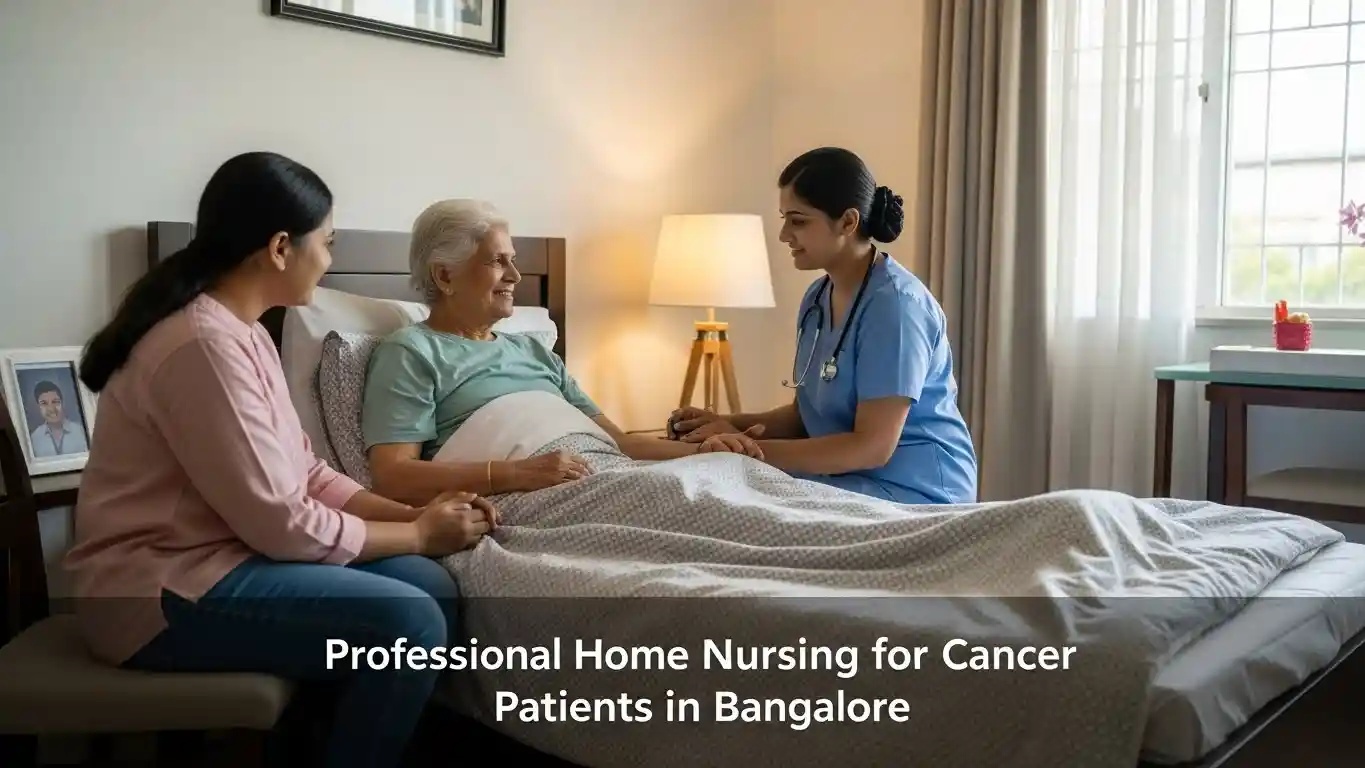
Professional Home Nursing for Cancer Patients in Bangalore: A Complete Pain & Symptom Management Guide
1-Minute Read Summary
Home nursing for cancer patients in Bangalore helps families manage severe pain and complex symptoms at home using evidence-based protocols like the WHO cancer pain ladder and structured nursing workflows.
This guide explains how professional nurses, trained caregivers, and families can work together to control pain, manage symptoms such as nausea, fatigue, and bedsores, and reduce hospital visits and costs.
By the end, you will know when home nursing is appropriate, what it costs in Bangalore, what to expect from a nurse, and how Spandhana Public Trust supports families with below-market pricing and caregiver training.
Explore More On: The Importance of Home Nursing for Cancer Patients
Introduction: The Bangalore Cancer Home-Care Dilemma
A cancer diagnosis brings a whirlwind of emotions and decisions. When a loved one with an advanced illness expresses a wish to remain at home, families in Bangalore often feel torn. You want to honor their desire for comfort and familiarity, yet the fear of managing intense pain, medical emergencies, and the sheer cost of care can be overwhelming. This is a common and difficult situation for countless families across the city.
Professional home nursing for cancer patients bridges this gap. It is a specialized service that provides clinical care—such as administering medications, managing wounds, and continuously monitoring vital signs—directly in the patient’s home. This care is carefully aligned with established palliative and pain-management guidelines to ensure the highest level of comfort and dignity.
With a rising cancer incidence and an aging population in India and specifically Karnataka, the need for effective, long-term home-based support has never been greater. Substantial evidence shows that structured home palliative care not only improves a patient’s quality of life but also significantly reduces disruptive hospitalizations and the financial strain on families.
This guide will walk you through how cancer pain and other key symptoms are professionally managed at home using recognized WHO and Indian palliative guidelines. You will discover practical workflows for both nurses and families, learn about typical costs in Bangalore, and see real examples from patient journeys. This article is written for family caregivers in Bangalore, senior citizens with cancer, individuals weighing the difficult choice between hospital and home care, and doctors looking for trusted home-care partners for their patients.

Understanding Cancer Pain at Home – Why Professional Nursing Matters
When a loved one is battling cancer, managing their pain becomes a central focus for the entire family. It’s more than just a symptom; it’s a constant presence that affects their quality of life, emotional state, and ability to connect with others. Understanding the nuances of cancer pain and why professional nursing is crucial for managing it at home can make a significant difference in your loved one’s comfort and well-being.
What Cancer Pain Looks Like in Real Life
Cancer pain is not a single sensation. It varies greatly depending on the type of cancer, its stage, and its location in the body. Patients at home often struggle to describe what they are feeling. A professional nurse can help interpret these descriptions to identify the root cause.
- Bone Pain: This is often described as a deep, dull ache that is constant and can worsen with movement. Patients might say, “It feels like a toothache in my bones.” It occurs when cancer spreads to the bone.
- Nerve Pain (Neuropathic Pain): This pain is caused by pressure on nerves or the spinal cord. Patients describe it with words like “burning,” “tingling,” “shooting,” or “pins and needles.” It can be sharp and sudden.
- Organ Pain (Visceral Pain): When cancer affects internal organs like the liver or pancreas, it can cause a vague, cramping, or pressure-like sensation that is difficult to pinpoint. A patient might say their abdomen feels “full” or “squeezed.”
Unfortunately, pain is often undertreated at home for several key reasons. Families may have a deep-seated fear of strong medications like opioids, worrying about addiction or side effects. This can lead to irregular dosing, where medicine is only given “as needed” once the pain is already severe, creating a painful cycle of suffering and relief. Without proper training, it’s also difficult for families to accurately assess pain, especially if the patient is unable to communicate clearly.
The WHO Cancer Pain Ladder in Simple Terms
To address pain systematically, healthcare professionals worldwide use the World Health Organization (WHO) cancer pain ladder. It’s a simple, proven approach that professional nurses use to provide consistent relief. The core principles are easy to understand:
- By Mouth: Whenever possible, pain medication should be given orally for ease and convenience.
- By the Clock: Medication should be given on a fixed schedule (e.g., every four or six hours), not just when the patient complains of pain. This prevents pain from returning and keeps it under control.
- By the Ladder: The strength of the medication should match the intensity of the pain, moving up the ladder as needed.
Here are the three steps:
- Step 1 (for Mild Pain): Uses non-opioid medications like paracetamol.
- Step 2 (for Moderate Pain): If pain continues, a weak opioid like tramadol is added.
- Step 3 (for Severe Pain): For intense pain, a strong opioid like morphine replaces the weak one.
A common mistake families make is stopping a strong medication like morphine as soon as the patient feels better, or switching back to “as needed” dosing. This allows the pain to break through again. A home nurse ensures the “by the clock” schedule is maintained, adjusting doses with the doctor to provide steady, effective relief.
Why Home Nursing Often Beats Hospital Stays for Advanced Cancer
While hospitals are essential for acute treatment, for long-term and advanced cancer care, the home environment often offers superior benefits. A professional home nursing service combines the best of both worlds.
- Comfort: The familiar surroundings of home, surrounded by loved ones, provide unmatched emotional and psychological comfort. Patients can sleep in their own beds and follow their own routines.
- Infection Risk: Hospitals, despite their best efforts, are environments where patients with weakened immune systems are at a higher risk of acquiring infections. Home care significantly reduces this risk.
- Family Presence: At home, family can be present 24/7 without the restrictions of hospital visiting hours, providing continuous emotional support that is vital for the patient.
- Cost: Long-term hospital stays can become incredibly expensive. Professional home care provides a much more affordable alternative for managing chronic symptoms.
At Spandhana Public Trust, our model is designed to bring hospital-level clinical protocols directly to your doorstep. Our trained nurses implement pain management and symptom control plans at home, ensuring high-quality care at a fraction of the cost of a hospital stay. This approach allows your loved one to receive the expert care they need in the place they most want to be: home.

Step-by-Step Pain & Symptom Management Protocols at Home
Effective home care relies on clear, consistent routines. Having established protocols helps families feel more in control and ensures the patient receives the best possible care. A professional nurse helps implement and oversee these step-by-step plans, turning a potentially chaotic situation into a manageable one.
Daily Pain-Management Workflow for Nurses & Families
A structured daily routine is the foundation of successful pain management. This shared workflow between the nurse and family ensures nothing is missed.
The process starts with a simple assessment. At regular intervals, ask the patient to rate their pain on a scale of 0 to 10. Note the type of pain (e.g., sharp, dull, burning) and any triggers that make it worse. Keeping a simple chart or notebook to track these details, along with medication timings, is incredibly useful. This log helps the nurse and doctor see patterns and adjust the care plan effectively.
The medication workflow should be clear. The nurse will typically prepare and organize the doses, but a designated family member is often responsible for administering them at the scheduled times. It is vital to follow the “by the clock” principle, giving medicine at fixed intervals, even if the patient is sleeping, to prevent pain from breaking through.
Beyond medication, several non-drug methods can provide significant comfort. Proper positioning with pillows can relieve pressure points. Applying a warm or cool pack to a sore area can soothe discomfort. A nurse can also teach simple breathing exercises and relaxation techniques to help manage anxiety and its effect on pain. Never underestimate the power of spiritual support, whether through prayer, meditation, or quiet companionship.
Managing Nausea & Vomiting in Cancer Patients at Home
Nausea is a very common and distressing symptom for cancer patients. It can be caused by chemotherapy, opioid medications, or the cancer itself. Managing it at home requires a proactive approach.
Practical tips can make a world of difference. Offer small, frequent meals instead of three large ones to avoid overwhelming the stomach. Choose low-odor foods, as strong smells can trigger nausea. Simple items like toast, rice, and clear soups are often well-tolerated. Keeping the patient hydrated is critical, so encourage small sips of water, clear juices, or ginger ale throughout the day. Ginger, in the form of tea or chews, is a well-known natural remedy for nausea.
It’s important to know when to seek professional help. If vomiting persists for more than a day, or if you notice signs of dehydration (like a dry mouth, reduced urination, or dizziness), it is time to call the nurse or doctor immediately.
Fighting Cancer-Related Fatigue Without Exhausting the Caregiver
Cancer-related fatigue is an overwhelming sense of exhaustion that rest does not always relieve. Managing it is about finding a balance between rest and activity.
Work with the nurse to create a gentle activity plan. This could be as simple as a short walk around the room or gentle stretching exercises in bed to keep muscles from weakening. Help your loved one create a daily “energy budget,” planning essential activities for times when they feel strongest. Good sleep hygiene is also important—try to maintain a consistent sleep schedule in a quiet, dark room.
Coordinate nursing visits strategically. For example, schedule bathing and wound care for a time that still leaves the patient with enough energy for meaningful activities later, like a family chat or watching a favorite show. This approach respects their limited energy and prioritizes quality of life.
Bedridden Care – Bedsores, Wounds & Catheters
For patients who are bedridden, preventing complications like bedsores (pressure injuries) is a top priority. These painful wounds are caused by prolonged pressure on the skin.
A strict two-hourly turning schedule is the most effective prevention method. A nurse can teach you how to reposition your loved one safely to relieve pressure on vulnerable areas like the hips, tailbone, and heels. Using a pressure-relieving mattress, such as an air or water mattress, can also provide significant protection. Be vigilant for early signs of a pressure injury, which include persistent red patches on the skin that don’t fade when pressed.
If the patient has a urinary catheter, families can assist with basic care like keeping the area clean and ensuring the drainage bag is below the bladder level. However, only a trained nurse should handle more complex issues. If you notice a blockage, a leak, or signs of a urinary tract infection (like cloudy urine, a strong odor, or fever), it is crucial to call the nurse immediately for intervention.
Supporting the Family Caregiver – Training, Burnout Prevention and Emotional Health
Caring for a loved one with cancer is an act of immense love, but it is also a physically and emotionally demanding marathon. In the home care setting, the family caregiver is often the unsung hero, bearing the weight of daily responsibilities. However, for the patient to receive the best care, the caregiver must also be supported. Neglecting the caregiver’s well-being is not just a personal issue; it directly impacts the quality and safety of the patient’s care.
Why Caregiver Burnout Threatens Patient Safety
Caregiver burnout is a state of physical, emotional, and mental exhaustion. It often happens when caregivers don’t get the help they need or try to do more than they are physically or financially able to. It is critical to recognize that burnout is not a sign of weakness; it is a common reaction to chronic stress.
Common signs of burnout include constant fatigue, irritability, sleep problems, weight changes, and feelings of helplessness or resentment. You might find yourself snapping at the patient over small things or feeling completely detached from the situation.
Crucially, burnout poses a significant risk to patient safety. When a caregiver is exhausted or distracted by stress, the margin for error increases dramatically. This can lead to serious consequences, such as:
- Medication Errors: Forgetting a dose, double-dosing, or mixing up medications.
- Physical Mishaps: Improper lifting techniques resulting in drops or falls during transfers.
- Neglect: Missing early warning signs of infection or new symptoms because of mental fog.
Protecting the caregiver against burnout is, therefore, an essential part of protecting the patient.
Core Skills Every Cancer Caregiver in Bangalore Should Learn
One of the biggest sources of anxiety for family members is the feeling of being untrained and unprepared. “Am I doing this right?” is a constant worry. Gaining specific, practical skills can replace fear with confidence.
Every primary caregiver looking after a cancer patient at home should aim to master these core skills:
- Safe Transfer and Positioning: Learning how to move a patient from a bed to a chair (and back) without hurting their back or yours is vital. This includes knowing how to turn a bedridden patient safely to prevent bedsores.
- Hygiene Routines: Understanding how to perform a sponge bath, change adult diapers, or assist with toileting while maintaining the patient’s dignity and preventing infection.
- Basic Vital-Sign Checks: Learning how to correctly use a thermometer, pulse oximeter, and blood pressure monitor. Knowing what the “normal” ranges are helps you decide when to call for help.
- Medication Logging: Maintaining a strict logbook of what medicine was given and when. This simple administrative habit prevents overdose and ensures pain is managed “by the clock.”
At Spandhana Public Trust, we don’t just send a nurse to do the job; we empower the family. During our nursing visits, we incorporate active training. Our nurses provide hands-on demonstrations of these tasks and leave behind simple checklists. This ensures that even when the professional nurse isn’t in the room, the family feels competent and supported.
Emotional Support & Boundaries for Caregivers
Emotional health is just as important as physical strength. Caregivers often feel guilty for taking even a moment for themselves, but you cannot pour from an empty cup. Establishing boundaries is healthy and necessary.
- Simple Self-Care Routines: Commit to small, non-negotiable breaks. Even 15 minutes of reading, a short walk, or enjoying a cup of tea in silence can reset your nervous system.
- Ask for Respite: Recognize that needing a break doesn’t mean you don’t love the patient. It means you are human. Reach out to other family members or friends to sit with the patient for a few hours.
- Seek Counseling: Joining a support group for cancer caregivers can be incredibly validating. Talking to others who understand the unique grief and stress of the journey reduces isolation.
Spandhana Public Trust supports this need for respite directly. We understand that 24/7 care is impossible for one person. We can arrange for staff rotation or add specific “attendant services”—trained personnel who handle the physical tasks of grooming and feeding. This service gives the primary family caregiver critical breathing space to rest, sleep, or simply be a family member rather than a nurse for a few hours. By sharing the load, we help you sustain your strength for the long haul.
Real-World Case Snapshots from Cancer Home Care in Bangalore
Theory and protocols are important, but the true value of professional home nursing comes to life in real situations with real families. These anonymized snapshots from our work in Bangalore illustrate how a structured, compassionate approach can transform the home care experience.
Case 1 – Bedridden Patient with Severe Bone Pain
Initial Situation: Mr. Kumar, a 78-year-old with advanced prostate cancer that had spread to his bones, was completely bedridden. His family reported that he was in constant, severe pain, rating it an 8 or 9 out of 10. He was barely sleeping, moaned frequently, and had been admitted to the hospital twice in the past month for pain crises. The family was exhausted and felt helpless.
Process & Intervention: A Spandhana nurse conducted a full assessment. Recognizing the classic signs of severe bone pain, she worked with Mr. Kumar’s oncologist to implement Step 3 of the WHO pain ladder, starting a regular schedule of oral morphine. The nurse trained the family to administer the medication “by the clock” every four hours and keep a simple pain and sleep log. She also taught them how to reposition him safely to prevent bedsores.
Results: Within 48 hours, Mr. Kumar’s average pain score dropped to a 2 out of 10. He began sleeping for five to six hours at a time. Over the next three months, he had zero emergency hospital admissions for pain. The family, now confident in their ability to manage his comfort, reported a dramatic reduction in their own stress levels.
Case 2 – Caregiver on the Edge of Burnout
Initial Situation: Mrs. Iyer, 72, was the sole caregiver for her husband, who was recovering from surgery for colon cancer. She was handling all his needs—from cooking and cleaning to wound care and medication management. She was physically exhausted, emotionally drained, and admitted to our nurse that she had made several medication errors due to fatigue. Her husband’s condition was unstable, largely because her burnout was impacting the consistency of his care.
Process & Intervention: Recognizing the signs of severe caregiver burnout, we proposed a two-part solution. A professional nurse visited three times a week to manage the complex wound care and oversee the medication plan. In addition, we arranged for a trained attendant to come for four hours every day. The attendant handled the physical tasks of bathing, feeding, and helping Mr. Iyer with mobility exercises.
Results: This intervention gave Mrs. Iyer critical breathing space. She was able to rest, eat properly, and shift her role from an overwhelmed nurse to a loving spouse. With professional support ensuring his medical needs were met, Mr. Iyer’s condition stabilized. His wound healed faster, and his overall mood improved. The family’s monthly spend was still less than half the cost of a single week in the hospital, and Mrs. Iyer’s health was protected.
Case 3 – Younger Patient Balancing Treatment and Work
Initial Situation: Priya, a 38-year-old graphic designer, was undergoing chemotherapy for breast cancer. The side effects, particularly severe nausea and debilitating fatigue, made it almost impossible for her to continue her freelance work from home. She was considering pausing her career, which caused significant financial and emotional distress.
Process & Intervention: We designed a coordinated care plan around her work schedule. A nurse visited in the mornings to administer anti-nausea medication before her chemo-related symptoms peaked. Our team also provided detailed nutrition guidance, suggesting small, high-protein, low-odor meals she could prepare in advance. We connected her with a counselor who specialized in supporting young adults with cancer.
Results: The proactive symptom management allowed Priya to have predictable, productive hours in the afternoon. She was able to meet her work deadlines without compromising her health. Having a structured care plan reduced her anxiety, and the counseling sessions helped her cope with the emotional challenges of her diagnosis. By receiving targeted support at home, she avoided hospitalization for side effects and was able to maintain her financial independence and professional identity throughout her treatment.
Costs, Packages and Planning Home Nursing in Bangalore
Planning for cancer care involves navigating not just medical decisions but also significant financial ones. Understanding the costs associated with home nursing can help families in Bangalore make informed choices that align with their budget and care needs. This financial clarity is a crucial step in creating a sustainable and low-stress home care environment.
Typical Costs of Home Nursing vs. Hospital in Bangalore (2025–2026)
One of the most compelling reasons for choosing home care is its cost-effectiveness compared to long-term hospital or hospice stays. While prices can vary, here are some indicative ranges for Bangalore to help you plan:
- 12-Hour Qualified Nurse: ₹1,800 – ₹2,500 per day
- 24-Hour Qualified Nurse (Live-in): ₹3,000 – ₹4,000 per day
- Basic Attendant (for non-medical support): ₹1,200 – ₹1,800 per day
- Essential Equipment (Rental):
-
- Pressure-relieving air mattress: ₹3,000 – ₹4,500 per month
- Bedside commode: ₹500 – ₹800 per month
When you compare these figures to institutional care, the savings become clear. A private room in a Bangalore hospital can easily cost ₹8,000 to ₹15,000 per day, excluding doctor’s fees, medications, and diagnostic tests. A month of hospital care could accumulate to several lakhs, whereas comprehensive home nursing often costs a fraction of that, all while providing one-on-one attention in a comfortable setting.
What Actually Drives the Cost Up or Down
The cost of home nursing is not one-size-fits-all. Several factors influence the final price, and understanding them helps you choose the right level of care for your needs.
- Shift Length: A 24-hour live-in nurse will cost more than a 12-hour or 8-hour shift nurse. Assessing when you need the most support can help manage costs.
- Nurse Qualification: A highly experienced nurse with specialized training in ICU or palliative care will have a higher fee than a nurse with more general qualifications.
- Complexity of Care: A patient who is bedridden, requires complex wound dressing, has multiple IV drips, or needs ventilator support requires a higher level of nursing skill, which is reflected in the cost. A more stable patient needing only medication management and monitoring will be less expensive to care for.
- Location: Travel time and accessibility for staff to locations on the outskirts of Bangalore can sometimes add a nominal amount to the daily fee.
At Spandhana Public Trust, our mission since 2001 has been to make quality healthcare accessible. As a charitable trust, we intentionally keep our prices below market rates. We believe that no family should have to choose between quality care and financial stability. This trust-building approach ensures that our focus remains on the patient’s well-being, not on profit margins.
Paying for Care – Insurance, Schemes and Practical Budgeting
Navigating the financial aspect of long-term care can be challenging. A common point of confusion for families in India is the role of health insurance. The reality is that most standard health insurance policies are designed to cover hospitalization expenses. They typically do not cover routine, long-term nursing or attendant services at home.
However, there can be exceptions. Some policies may offer limited coverage for post-hospitalization care at home if it is explicitly prescribed by a doctor as essential for recovery. It is always worth speaking directly with your insurance provider to clarify the specifics of your plan.
For most families, budgeting is the most practical approach. To create a 3–6 month budget for advanced cancer care at home, consider the following:
- Nursing/Attendant Fees: Decide on the level of support needed (e.g., 12-hour nurse) and calculate the monthly cost.
- Medications: Get an estimate from the doctor for the monthly cost of pain medications, antibiotics, and other essential drugs.
- Medical Supplies: Budget for recurring items like adult diapers, wound dressing materials, gloves, and catheter bags.
- Equipment Rental: Factor in the monthly rental for any necessary equipment like an air mattress, oxygen concentrator, or suction machine.
Planning for these expenses in advance can provide peace of mind and prevent financial surprises during an already stressful time.
How to Choose the Right Home Nursing Partner in Bangalore
Entrusting the care of a loved one with cancer to a stranger is a leap of faith. In Bangalore, where numerous agencies and independent providers operate, finding a reliable partner can feel daunting. The right home nursing service is not just a provider of medical tasks; they become an extension of your family support system. To make this crucial decision with confidence, you need to know exactly what credentials to look for and what questions to ask.
Credentials and Standards to Check
The foundation of safe home nursing is professional qualification. Unlike general caregiving, cancer care requires specific medical knowledge. When interviewing potential agencies or nurses, you must verify their credentials rigorously.
First, ensure that the nurses are registered with the Indian Nursing Council (INC) or the Karnataka State Nursing Council. This registration is the hallmark of a legitimate medical professional. Look for qualifications such as GNM (General Nursing and Midwifery) or BSc in Nursing. These degrees ensure the nurse has undergone years of formal education in anatomy, pharmacology, and patient care. Additionally, ask if the staff has undergone any specific training in palliative care or cancer management. Certification in these areas indicates a higher level of expertise in managing pain and complex symptoms.
Don’t hesitate to ask detailed questions about their operational standards:
- Protocols: “Do you follow specific clinical protocols for pain management and wound care?”
- Supervision: “Who oversees the nurse’s performance? Is there a senior doctor or nursing superintendent I can talk to?”
- Shift Handovers: “If we have 24-hour care with different nurses, how do they communicate patient updates to each other to ensure nothing is missed?”
- Emergency Escalation: “What is the exact protocol if my loved one has a sudden medical emergency at 2 AM? Who do we call?”
Safety, Ethics and Communication Practices
Technical skills are essential, but in a home setting, safety, ethics, and communication are equally vital. A professional agency will have transparent practices that protect both the patient and the family.
Documentation is key. A reputable partner will maintain a daily file at your home, recording every medication given, vital sign checked, and procedure performed. This log is a legal and medical necessity. Look for practices like medication double-checks, where the nurse verifies the drug name and dosage before administration, a critical step in preventing errors.
Informed consent and respect are non-negotiable. The nurse should always explain what they are doing before they do it, whether it’s changing a dressing or administering an injection. They must respect the patient’s privacy and dignity at all times.
At Spandhana Public Trust, we add an extra layer of safety through our internal quality checks. We don’t just place a nurse and walk away. Our supervisors conduct regular visits—both scheduled and surprise—to ensure care standards are being met. We also conduct routine feedback calls with families to catch and resolve any small issues before they become problems. This proactive approach ensures that your home remains a safe sanctuary for healing.
What Makes Spandhana Public Trust Different
In a city with many options, Spandhana Public Trust stands apart because our mission is driven by service, not profit. Operating since 2001, we have two decades of experience navigating the complexities of home healthcare in Bangalore. Over these years, we have had the privilege of supporting thousands of patients and senior citizens, helping them manage their day-to-day activities and medical needs with dignity.
Our commitment to accessibility is reflected in our below-market pricing. We understand that long-term cancer care is financially draining, which is why we strive to keep our rates affordable without compromising on the quality of our experts.
While we specialize in home nursing services for senior citizens and cancer patients, our holistic approach covers a wide range of needs. We provide:
- Senior Citizen Care Taker Service: For non-medical daily assistance.
- Bedridden Patient Care: Specialized attention for those with limited mobility.
- Nutrition Awareness: Helping families plan healthy meals for recovery.
- Family Counselling: Supporting the emotional health of caregivers.
- Mother and Child Care: extending our compassionate care to new beginnings as well.
We are proud of our standing in the community and the trust placed in us by families across Karnataka. [Space Reserved for specific awards, partnerships, or recognitions]. When you choose Spandhana, you aren’t just hiring a service; you are partnering with an organization that has dedicated over 20 years to the well-being of Bangalore’s families.
FAQs About Home Nursing for Cancer Patients in Bangalore
Is home nursing safe for advanced-stage cancer patients?
Yes, home nursing is safe and effective for advanced-stage cancer patients when delivered by qualified professionals. Nurses follow strict clinical protocols for pain management, wound care, and infection control, mirroring hospital standards within the home environment. However, safety depends on the stability of the patient; in cases of acute respiratory distress, uncontrolled bleeding, or sudden loss of consciousness, immediate hospital admission is still the necessary and safest course of action.
How many hours of nursing support does a typical cancer patient need per day?
The hours required depend entirely on the patient’s symptoms and the family’s ability to assist. A patient who is mobile but needs help with medication management may only require a 2-hour visit or a 12-hour day shift. Conversely, a bedridden patient with complex needs like IV fluids, catheter care, or severe pain often requires 24-hour nursing support to ensure continuous monitoring and safety.
What’s the difference between a nurse, a trained attendant, and an untrained helper – and who should we choose?
A qualified nurse (GNM/BSc) performs clinical tasks like injections, wound dressing, and catheterization. A trained attendant assists with hygiene, feeding, and mobility but cannot perform medical procedures. An untrained helper lacks formal medical or caregiving training and is risky for cancer care. For cancer patients, we strongly recommend a qualified nurse for medical needs, potentially supported by an attendant for physical tasks.
Can home nursing really reduce hospital visits and costs for our family?
Absolutely. By proactively managing symptoms like pain, dehydration, and infections at home, professional nursing prevents the small issues from becoming emergencies that require hospitalization. This significantly lowers costs by avoiding expensive room charges and ICU fees. While emergency hospital visits may still be needed for severe complications, routine hospitalizations for symptom management are drastically reduced.
What happens in an emergency at night or on weekends?
Professional home nursing agencies establish clear escalation protocols for all shifts, including nights and weekends. If a nurse is present, they are trained to stabilize the patient and contact the supervising doctor immediately. If the situation is critical and beyond home management capabilities—such as a heart attack or severe seizure—the protocol is always to call an ambulance for immediate transfer to the nearest hospital.
How does Spandhana start with a new family – what are the first 7 days like?
The first week with Spandhana is structured to build trust and routine. It begins with a comprehensive assessment of the patient’s needs and home setup, followed by the introduction of the care team. Over the next few days, we establish medication and hygiene routines, train family members on basic support, and fine-tune the care plan based on the patient’s response, ensuring everyone feels confident and supported by day seven.
Next Steps – How to Start Home Nursing for Cancer in Bangalore
Taking the first step toward getting professional help can feel like the hardest part. We aim to make the process simple, transparent, and centered around your family’s unique needs. Here is a clear path to starting professional home nursing care in Bangalore.
Step 1 – Book a Free Needs Assessment
Everything begins with a conversation. You can initiate this with a simple phone call or by filling out a form on our website. We will schedule a short, structured assessment, which can be done over the phone or through a home visit. During this free consultation, one of our senior nurses will take the time to understand your situation. They will gently inquire about the patient’s medical condition, current symptoms, mobility, and the physical setup of your home. They will also assess your family’s current capacity and concerns, helping to identify where support is most needed.
Step 2 – Customize Your Care Plan and Budget
There is no “one-size-fits-all” solution in home care. Based on the initial assessment, we will work with you to create a personalized care plan. You have the flexibility to choose what works best for your family and budget. This includes deciding on the length of nursing shifts (e.g., 8, 12, or 24 hours), the number of days per week care is needed, and the level of expertise required. You can also integrate add-on services like nutrition counseling to manage diet, physiotherapy to maintain mobility, or family counseling sessions to support emotional well-being.
Step 3 – Onboarding, Training and First Week Roadmap
Feeling in control from day one is crucial for your peace of mind. We provide a clear roadmap for the first week so you know exactly what to expect.
- Day 1: Your assigned nurse arrives, gets acquainted with the patient and family, reviews all medical documents, and establishes a baseline for vital signs and pain levels.
- Day 2-3: The nurse implements the core care routines, such as the medication schedule and repositioning chart. The family receives hands-on training for basic tasks like logging information and recognizing symptoms.
- Day 4-5: The focus shifts to fine-tuning the plan. The nurse will observe how the patient is responding to the care and make adjustments in collaboration with your doctor.
- Day 6-7: By the end of the first week, a stable and predictable routine is typically established. Our supervisor will check in with you to gather feedback and ensure you are comfortable and confident with the plan.
When you are ready to explore how professional home nursing can help your family, we are here to listen. There is no pressure and no obligation. We promise transparent pricing with no hidden costs and flexible arrangements without any long-term lock-in contracts.
Call or WhatsApp us today to request a free, no-obligation consultation with our care team. Let us help you find the right support for your loved one.