Diabetic Diet Management for Seniors at Home in Bangalore (2026): Blood Sugar Control + Caregiver Guide
1-Minute Read Summary
Start simple today: use the Bangalore Plate Method—half the plate with colourful non-starchy vegetables, one quarter with protein like dal or curd, and one quarter with smart carbs such as ragi or brown rice. Watch for signs of low or high blood sugar and log meals. When cooking, monitoring, and medicines feel too much for the family, Spandhana’s experienced caregivers can take the load, giving you peace of mind and your senior steady blood sugar control at home.
Introduction
Living in fast-paced Bangalore, many families juggle work, traffic, and the heartfelt wish to keep their elderly parents or grandparents safe, happy, and independent at home. When diabetes enters the picture, the biggest daily worry often becomes “What should they eat today?”
Diabetic diet management for seniors at home in Bangalore simply means creating meals that control blood sugar through smart portioning, regular timing, low-GI Indian food swaps, good hydration, and easy monitoring. It is not about strict hospital food or counting every calorie. It is about practical changes that fit into real South Indian or Karnataka-style kitchens—think ragi porridge, vegetable sambar, or millet upma instead of large bowls of white rice.
For older adults, these steps matter even more. Steady glucose levels help prevent sudden tiredness, confusion, falls, or weakness that can steal independence. They also lower the risk of frailty and keep energy for small joys like a morning walk in Lalbagh or chatting with grandchildren.
Since 2001, Spandhana Public Trust has stood by Bangalore families with affordable home nursing and caretaker support. Our trained team tailors help to each senior’s exact condition and family needs—always with transparency on pricing that depends on the level of care required.
Diabetic diet basics for seniors (and why seniors need a different approach)
When we talk about diabetic diet for seniors, we are not talking about the same plan a 40-year-old might follow. Older bodies work differently, and blood sugar control elderly needs extra care to stay safe and comfortable at home.
Key terms in simple language
GI (Glycemic Index) tells how fast a food raises blood sugar. Low-GI foods (under 55) are your friends — think ragi, whole dals, and most vegetables. GL (Glycemic Load) also counts the portion size. Fibre helps slow sugar release, protein keeps you full longer, and hydration (6–8 glasses a day) prevents both high and low readings. Portion size simply means using a smaller plate or bowl so the eyes and stomach feel satisfied without overloading blood sugar.
What changes in seniors
Appetite often drops with age. Chewing becomes harder with missing teeth or dentures. Constipation is common because of less movement and some medicines. Frailty risk grows if meals are skipped or unbalanced. That is why a “balanced diet” for elderly diabetics must focus on easy-to-eat, high-fibre, high-protein foods that also protect muscles and bones.
Safety note Every diet must match the senior’s medicines or insulin exactly. Eating too little can cause dangerous low sugar (hypoglycemia), while eating too much can push sugar high. Always check with the doctor before making big changes. Spandhana’s caregivers are trained to watch these signs closely.
The “Bangalore Plate Method” (portioning that works with Indian meals)
Counting every spoon of rice or roti can feel stressful for busy Bangalore families and tiring for seniors. That is why the diabetic plate method India is a game-changer. It is a simple visual trick that brings portion control without calculators or apps.
Plate method layout
Take a regular dinner plate (9–10 inches). Fill half with non-starchy vegetables — beans poriyal, cabbage stir-fry, cucumber raita, or spinach. One quarter with protein — dal, curd, grilled fish, paneer, or egg white. The last quarter with smart carbs — a small portion of brown rice, ragi ball, or millet khichdi. This easy division automatically controls blood sugar because vegetables and protein slow down carb absorption. Families love it because no one has to weigh food; just “fill by eye” and adjust gently.
Smart carb swaps commonly eaten in Bangalore
White rice spikes sugar fast, so limit it to a small fist-size portion. Switch to brown rice on some days or, even better, ragi and millets that are common in Karnataka kitchens. Instead of idli with only chutney, add extra vegetable sambar. Dosa can become millet dosa with more greens inside. These low GI Indian foods keep energy steady and taste just like home food.
Fibre target + practical add-ons
Aim for 25–30 grams of fibre every day. Easy ways to reach it: start lunch with a small salad or sprouts, end dinner with a bowl of vegetable soup, and always add a big spoon of dal or vegetable sambar. These small habits make a big difference in blood sugar control and digestion for seniors.
Original insight box Spandhana’s 3-rule kitchen framework for caregivers
Measure — keep carbs to one quarter of the plate (a small katori).
Mix — always combine carbs with fibre and protein so sugar rises slowly.
Monitor — check blood sugar 2 hours after the meal and note it down. Follow these three steps daily and most families see smoother readings within a week.
7-day diabetic diet plan for elderly at home (South Indian-friendly)
A good diabetic meal plan elderly does not need to be complicated or boring. Here is a simple, realistic 7-day structure that works in most Bangalore homes. Remember, this is only a sample guide — not a medical prescription. Always adjust with your doctor or dietitian based on medicines, kidney health, and daily activity.
How to customize by condition
For active seniors who walk a little every day, keep normal portions and add one extra fruit (like a small apple or guava). For bedridden seniors, make meals softer and smaller but more frequent. If chewing is difficult, mash idlis, use soft rotis soaked in dal, or give thick soups. For constipation, add one spoon of soaked flaxseeds or more greens every day. These small changes make the plan safe and comfortable.
Day-wise sample structure Breakfast
(7–8 am): 2 small idlis with sambar loaded with vegetables, or vegetable upma with extra beans and carrots, or ragi porridge with a spoon of curd. Mid-morning (10 am): A small bowl of buttermilk or cucumber slices. Lunch (12:30–1:30 pm): 1 small roti or ½ katori brown rice + dal + plenty of stir-fried vegetables + curd. Evening snack (4 pm): Handful of roasted chana or a small pear. Dinner (7 pm): Lighter — vegetable khichdi with moong dal, or 1 roti with paneer bhurji and salad. Keep dinner early and light so blood sugar stays steady at night.
Mini table: Foods to prefer / limit
| Foods to Prefer (Low-GI, daily use) | Foods to Limit (High-GI, small or rare) |
|---|---|
| Ragi, millets, brown rice, oats | White rice, white bread, polished rice |
| All non-starchy vegetables, greens | Potatoes, yam, sweet corn |
| Dal, curd, paneer, fish, egg white | Fried items, sweets, fruit juice |
| Guava, apple, pear, papaya (small) | Mango, banana, grapes (large portions) |
| Vegetable sambar, rasam, sprouts | Pickles, papad, packaged snacks |
These swaps keep the taste of home while helping blood sugar control.
Daily caregiver workflow (meal timing + sugar monitoring + medication coordination)
A steady daily routine is one of the most powerful tools for blood sugar control in elderly diabetics at home. When a caregiver follows a clear workflow, it reduces stress for both the senior and the family — no more guessing “Did they eat? Did they take medicine?”
Simple routine (wake–breakfast–midday–dinner)
Wake up by 7 am → gentle movement if possible → breakfast by 8 am → mid-morning snack → lunch by 1 pm → evening tea/snack at 4 pm → light dinner by 7–7:30 pm. Early dinner and no late-night eating is especially helpful for seniors. Meal timing elderly like this keeps blood sugar steady and prevents lows during sleep. Check blood sugar at doctor-advised times — usually fasting in the morning and 2 hours after main meals. Use the same glucometer every day and note readings in a simple logbook or phone app.
What to record daily
Write down: fasting sugar, post-meal readings, appetite (good/fair/poor), glasses of water drunk, bowel movements, sleep hours, and a quick foot check for any cuts or swelling. This caregiver checklist diabetic seniors becomes a ready report for the doctor during monthly visits.
Experience signals – Common mistakes Spandhana sees at home
We often notice families skipping meals when appetite drops, giving too many “sugar-free” biscuits, offering large fruit portions late in the day, or not matching meal size with medicines. These small slips can cause sudden sugar swings. Our trained attendants follow a printed daily checklist to catch and fix them early.
Special situations (bedridden seniors, kidney issues, BP, low appetite)
When diabetes comes with other health problems, the diet plan must be adjusted with extra care. This keeps the senior safe and comfortable at home in Bangalore.
Bedridden feeding safety
For bedridden diabetic diet, offer small frequent meals every 2–3 hours instead of three big meals. Focus on protein to maintain strength — mashed dal, paneer, curd, or soft fish. Keep good hydration with sips of water, buttermilk, or coconut water throughout the day. Add fibre gently to prevent constipation. If swallowing is difficult, pureed foods or thickened liquids may be needed. In such cases, ask for a clinical review from a doctor or speech therapist right away.
Kidney/heart/BP caution
Kidney or heart conditions change what is safe. Always have an “Ask-your-doctor list”: how much salt, protein, and potassium is allowed? High-potassium foods like banana or tomato may need limits. One-size plans fail because each senior’s medicines and lab reports are different. Trust your doctor’s advice and share the full health picture with the caregiver for best results.
DIY vs hiring help in Bangalore (cost, roles, and what to expect)
Many families in Bangalore start managing diabetic diet management for seniors at home themselves. They cook special meals, track sugar, and give medicines with love. But as weeks turn into months, the constant effort can leave everyone tired. This is when comparing DIY with professional help becomes a practical step for better blood sugar control and family peace.
Who does what: caretaker meal prep + reminders vs nurse monitoring + clinical support
A caretaker (attendant) prepares meals using the plate method, gives medicine reminders on time, helps the senior eat comfortably, and provides daily companionship and light help. A trained nurse goes further with monitoring + clinical support — accurate blood sugar checks, insulin if needed, vital signs tracking, and quick doctor coordination.
Pricing transparency note
Home nursing for diabetic patients Bangalore and attendant services have flexible costs. The price depends on the patient’s exact condition, hours per day, and whether basic caretaker or skilled nursing is required. Spandhana Public Trust keeps pricing open and condition-based so families plan without hidden charges.
Checklist for choosing a provider
- Experience specifically with diabetic seniors
- Clear daily monitoring routine
- Fast escalation process for any health change
- Regular family updates via call or WhatsApp
These points help you choose support that truly fits your home.
How Spandhana Public Trust supports diabetic seniors at home (since 2001)
Since 2001, Spandhana Public Trust has quietly helped thousands of Bangalore families keep their elderly parents safe and comfortable at home while managing diabetes. For over 24 years we have focused on practical, affordable care that fits real Indian homes — no big hospital bills, no long waits, just steady support right at the dining table and bedside.
We map every service directly to what families need most:
- Home Nursing for accurate blood sugar checks, medicine timing, and vital monitoring
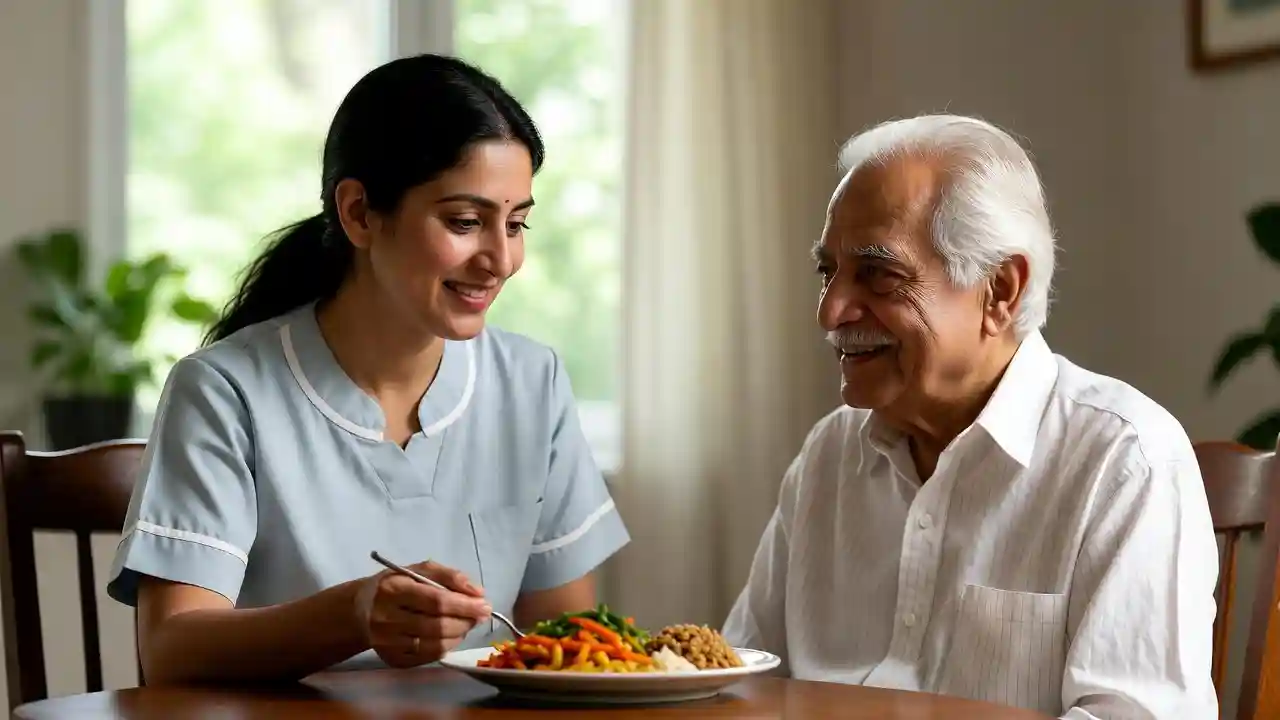
- Senior Citizen Caretaker for daily meal prep using the plate method and gentle reminders
- Bedridden Patient Care with safe feeding, positioning, and hygiene
- Nutrition Awareness Program teaching low-GI swaps and simple kitchen tips
- Helper for Patient Care at Home for all daily activities
- Family Counselling to reduce arguments over food rules and build team spirit
Our caregivers go through hands-on diabetes training before they step into any home. We follow a clear escalation workflow the moment sugar levels go out of range and send short family updates every day or every week, whichever you prefer. Many families tell us this support has brought better routine adherence and far fewer missed meals.
We proudly serve most parts of Bengaluru including Jayanagar, Whitefield, HSR Layout, Koramangala, Indiranagar, Malleswaram, and Electronic City — and we can reach your area too.
Real Examples / Case Studies
These real-life stories from Bangalore homes show how small, consistent changes plus the right support can make diabetic diet management for seniors at home much easier and more effective. Names and exact details have been changed to protect privacy, and results vary from person to person.
Case 1 – Jayanagar
Uncle Ramesh, 72, had high post-meal sugars every evening even though he was on tablets. His daughter started the Bangalore Plate Method with our caretaker: smaller rice portions, extra vegetable sambar, and a simple logbook. Within three weeks, his 2-hour readings became steadier. The family now says dinner feels relaxed instead of stressful.
Case 2 – Whitefield
Aunty Lakshmi, 78, was bedridden after a fracture and had poor appetite plus diabetes. Our nursing team shifted her to small, frequent meals every two hours, added protein shakes, and kept careful hydration records. Emergency hospital calls dropped sharply. “We sleep better at night now,” her son shared. (Results vary based on overall health.)
Case 3 – HSR Layout
In a joint family, arguments about “no sweets, no rice” were constant. Spandhana’s family counselling sessions plus a weekly menu plan helped everyone understand the plate method together. Meals became a team effort instead of a fight. Adherence improved, stress reduced, and the senior’s HbA1c showed better control at the next check-up.
These examples remind us that the right mix of practical diet tools and caring hands can truly change daily life for diabetic seniors in Bangalore.
FAQs about diabetic diet management for seniors at home in Bangalore
1. What is the best diabetic diet for senior citizens at home in Bangalore?
The best diabetic diet for senior citizens at home in Bangalore is simple, flexible, and based on the Bangalore Plate Method: half vegetables, one-quarter protein, and one-quarter smart carbs like ragi or millets. Use low-GI Indian foods, keep regular meal timing, and match portions to medicines. It tastes like home food and helps steady blood sugar without stress.
2. Is ragi or millets better than white rice for diabetes in elderly?
Yes, ragi and millets are much better than white rice for diabetes in elderly. They have a lower GI, higher fibre, and release sugar slowly. A small ragi ball or millet khichdi keeps energy steady and helps digestion — perfect for seniors who need easy, filling meals.
3. How many times should an elderly diabetic patient eat in a day?
Most elderly diabetic patients should eat 5–6 times a day: breakfast, mid-morning snack, lunch, evening snack, dinner, and a small bedtime snack if needed. Small frequent meals prevent big sugar swings and keep energy stable, especially for seniors with low appetite.
4. What foods should elderly diabetics avoid in an Indian diet?
Elderly diabetics should limit or avoid white rice in large amounts, potatoes, sweets, fruit juices, fried snacks, pickles, and packaged foods high in sugar or maida. Choose small portions and always pair with vegetables and protein.
5. When should I hire a home nurse or caretaker for a diabetic senior in Bengaluru?
Hire help when family members feel tired, blood sugar readings swing often, medicines are missed, or the senior is bedridden or has low appetite. If you notice frequent hospital visits or family arguments about food, it is time for professional support.
6. Can a caretaker help with diabetic meal planning and blood sugar monitoring at home?
Yes, a trained caretaker can fully help with diabetic meal planning using the plate method, prepare low-GI meals, remind about medicines, check and record blood sugar, and share daily updates with the family. Spandhana’s caregivers are specially trained for this.
Actionable Next Steps
You don’t have to do everything at once. Here is a simple 3-step action plan you can start today:
- Use the Bangalore Plate Method for the very next meal — fill half with vegetables, one quarter with dal or curd, and one quarter with ragi or brown rice.
- Keep a small notebook or phone note for daily blood sugar readings and meals.
- Gather the family once a week to plan the menu together using the 7-day sample above.
To make it even easier, download our free “7-Day Bangalore Senior Diabetic Meal Planner + Grocery List” PDF right now — it has shopping tips and ready portions for Karnataka kitchens.
When the daily load feels heavy, Spandhana Public Trust is just a call or WhatsApp away. Get a condition-based home nursing or caretaker plan plus a free nutrition awareness visit at truly affordable rates with full transparency.
Take the first small step today — your senior’s steady blood sugar and your family’s peace of mind are worth it.
Conclusion
Effective diabetic diet management for seniors at home in Bangalore is achievable through the simple yet powerful combination of the Bangalore Plate Method, low-GI Indian food swaps, and a consistent caregiver workflow. Together, these create sustainable blood sugar control while keeping meals tasty and familiar.
Always personalize the approach based on your doctor’s advice, medicines, and any other health conditions. This article is meant for educational purposes and is not a substitute for professional medical advice.
Take action today – request an at-home assessment for your diabetic senior with Spandhana Public Trust and bring expert, compassionate care to your home in Bangalore.