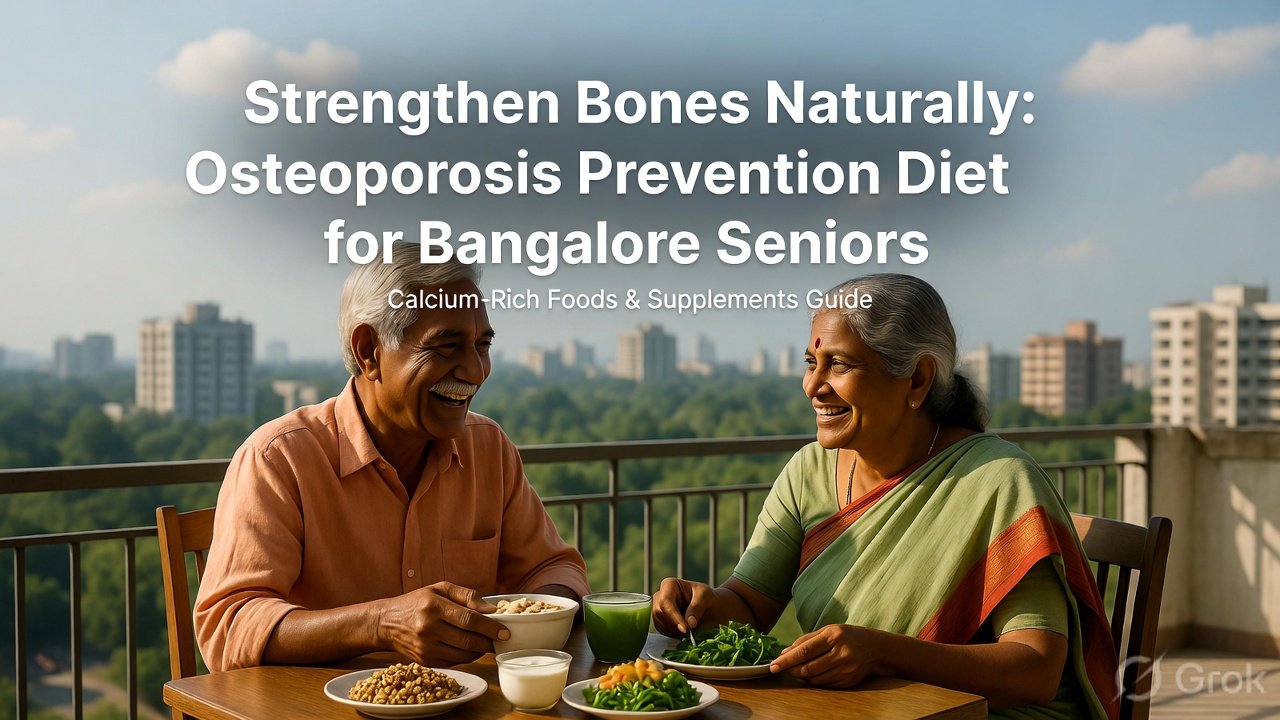
Calcium and Bone Health for Elderly: Osteoporosis Prevention Diet and Supplements [Complete Guide for Bangalore Seniors]
1-Minute Read Summary
This guide explores essential nutrition for maintaining bone health in elderly individuals, focusing on calcium-rich diets and supplements to prevent osteoporosis. It’s especially important for Bangalore’s aging population, where busy urban life, less time outdoors, and changing food habits often leave bones weaker than they should be.
You’ll discover simple, practical diet plans using everyday Karnataka ingredients like ragi and sesame, smart supplement tips that fit modest budgets, and easy ways to blend these into daily routines. Families caring for parents at home, seniors who want to stay active, and caregivers seeking gentle, affordable solutions will find clear steps to build stronger bones, lower fracture risk, and bring back joy and independence. Small changes today can mean fewer hospital worries tomorrow.
Introduction
In Bangalore’s fast-paced urban environment, osteoporosis cases are surging among the elderly, with prevalence reaching 37% in those aged 60 and above due to sedentary lifestyles and nutritional gaps. This condition, characterized by weakened bones and increased fracture risk, affects millions in India, particularly in cities like Bangalore where limited sunlight and modern diets exacerbate the issue. Families caring for seniors often face challenges in managing bone health elderly diet Bangalore, but simple dietary changes can make a difference.
Bone health in the elderly involves maintaining density to support mobility and independence at home. Osteoporosis, a silent thief of bone strength, develops from factors like hormonal shifts and deficiencies in key nutrients.
In the context of home health care, an osteoporosis prevention diet focuses on calcium and vitamin D to counteract age-related loss. Post-pandemic, there’s a growing emphasis on affordable, home-based wellness strategies in Karnataka, helping seniors avoid hospital visits.
This guide equips readers with practical tools for osteoporosis management elderly, including how to improve bone health seniors through tailored meal plans and vitamin D supplements elderly. You’ll discover ways to integrate local foods into daily routines, ideal for caregivers using home nursing services in Bangalore. By addressing these, families can foster joyful, independent aging.
Empower yourself with evidence-based tips to prevent bone loss and enhance quality of life.
Understanding Bone Health Challenges for Elderly in Bangalore
As people get older, bones lose strength and become thinner. This happens because the body breaks down old bone faster than it builds new bone. In Bangalore, city life adds to the problem with less outdoor time and more pollution, which cuts down on natural sunlight needed for strong bones.
Osteoporosis is common among seniors here, making bones fragile and easy to break. Studies show a prevalence of 32.5% in men and 42.2% in women over 50 in rural South India, including parts of Karnataka, but urban areas like Bangalore face similar issues due to diet changes and less activity. Key causes include hormone shifts after menopause, low calcium in typical Indian meals, and vitamin shortages.
To manage this, focus on better eating and simple habits. Early steps in osteoporosis management elderly can boost bone density improvement and help with fracture prevention nutrition. This avoids big medical bills and keeps seniors active at home.
Bangalore’s weather and busy streets make it hard for elders to get enough sun, leading to weaker bones over time.

The Role of Calcium in Elderly Bone Health
Calcium plays a key part in keeping bones strong and healthy as people age. It helps repair old bone and build new bone to maintain density. Without enough, bones can weaken, leading to breaks and conditions like osteoporosis.
Seniors need more calcium because their bodies absorb less over time. Aim for 1,200 mg each day if over 50 to support bone health. This comes from food or supplements, but start with calcium-rich food seniors can eat easily.
Calcium Requirements by Age Group
- Adults 19 to 50 years: 1,000 mg per day.
- Women 51 years and older: 1,200 mg per day.
- Men 51 to 70 years: 1,000 mg per day.
- Men 71 years and older: 1,200 mg per day.
Factors Affecting Absorption in Seniors
Absorption drops with age, so seniors get less from the same amount. Low vitamin D, certain medicines, and high doses at once reduce uptake. Stomach acid issues or menopause can also play a role.
To improve calcium absorption optimization, take smaller doses spread out, pair with vitamin D, and choose the best calcium sources for elderly like citrate forms. Check with a doctor for calcium supplement dosage to avoid problems.
Top Calcium-Rich Foods for Seniors in a Bangalore Diet
Seniors in Bangalore can find many local foods that boost calcium levels without spending much. These help keep bones strong and prevent weakness from age.
Start with dairy products elderly like milk, curd, and paneer. A cup of milk gives about 300 mg of calcium, while paneer offers around 200 mg per 100 grams. For those who avoid dairy, try lactose-free calcium sources such as ragi, a Karnataka staple with up to 344 mg per 100 grams.
Plant-based calcium options include sesame seeds, which pack 975 mg per 100 grams, and leafy greens like spinach or fenugreek with 100-200 mg per cup. Almonds and chickpeas add more, easy to find in local markets. Fortified foods calcium, like some breads or juices, can fill gaps.
Try simple meals: Mix ragi flour into porridge for breakfast, or make a spinach curry for lunch. Add sesame seeds to salads or chutneys for snacks. These blend well with Bangalore’s fresh produce.
Focus on calcium-rich food seniors from nearby shops to make eating easy and tasty at home.
Osteoporosis Prevention Diet Plan for Elderly
A good osteoporosis prevention diet helps keep bones strong by balancing nutrients like calcium and protein. This supports bone remodeling and avoids too much phosphorus, which can block calcium uptake.
Focus on meals spread out during the day. Eat calcium-rich foods in smaller portions for better absorption, like with vitamin D sources in sunlight or fortified items.
Breakfast Ideas
Try ragi porridge: Mix 1/2 cup ragi flour with 200ml milk, add a handful of almonds. This gives about 400mg calcium and supports phosphorus balance.
Or have curd with sesame seeds: 200g plain curd topped with 1 tbsp seeds and fruit. It’s easy for seniors and aids bone remodeling support.
Snacks and Dinner Options
For snacks, grab 5 soaked almonds mid-morning or a small yogurt in the evening. These add magnesium without overloading phosphorus.
Dinner: Vegetable dal with greens like spinach (1 cup) and chapati. Or paneer stir-fry with broccoli (100g paneer). Pair with a side of fortified milk.
Sample 7-Day Plan:
- Day 1: Breakfast – Ragi dosa with chutney; Snack – Almonds; Lunch – Spinach dal and rice; Dinner – Tofu curry with veggies.
- Day 2: Breakfast – Curd with seeds; Snack – Fig; Lunch – Chickpea salad; Dinner – Paneer with greens.
- Day 3: Breakfast – Idli with sambar; Snack – Yogurt; Lunch – Drumstick soup; Dinner – Fish or lentil stew.
- Day 4: Breakfast – Thinai porridge; Snack – Banana; Lunch – Paneer rice bowl; Dinner – Broccoli stir-fry.
- Day 5: Breakfast – Yogurt smoothie; Snack – Sesame laddoo; Lunch – Leafy greens dal; Dinner – Chickpea curry.
- Day 6: Breakfast – Ragi porridge; Snack – Almonds; Lunch – Vegetable sambar; Dinner – Tofu with rice.
- Day 7: Breakfast – Curd with fruit; Snack – Fig; Lunch – Spinach paneer; Dinner – Lentil soup.
This osteoporosis diet plan uses local Indian foods for easy home prep in Bangalore.
Vitamin D Supplements for Elderly Bone Density
Vitamin D works with calcium to build and keep bone density strong. It helps the body take in calcium from food, which stops bones from getting weak and breaking easily.
In places like Bangalore with less sun due to pollution, seniors often need vitamin D supplements elderly to make up for low sunlight exposure vitamin D. Choose vitamin D3 supplementation over D2 because D3 comes from animals and raises blood levels better.
Adults over 70 should aim for 800 IU of vitamin D each day to help bone density improvement and prevent falls. Take it with meals for better uptake, and check with a doctor if on other meds.
For safe options without sun, eat fortified foods like milk or cereals, or get short outdoor time in early morning. Bangalore’s air quality cuts natural vitamin D making, so supplements fill the gap well.
This boosts overall bone health in low-sun areas.
Incorporating Vitamin K and Magnesium for Better Bone Health
Vitamin K helps build the bone matrix by making sure calcium stays in the bones. This keeps bones strong and cuts the chance of breaks. Magnesium supports bone density and keeps muscles firm to prevent sarcopenia, the muscle loss that often comes with age.
These two nutrients work well with calcium for complete bone protection. Many seniors in Bangalore miss them because of busy urban diets.
Food Sources
Add leafy greens like spinach and fenugreek leaves for vitamin K – easy to find fresh in local markets. For magnesium, use ragi porridge, a handful of almonds, or a banana daily. Whole grains and lentils also help.
Interaction with Calcium
Vitamin K and magnesium make calcium work better in the body. Without enough of them, extra calcium may not reach the bones properly. Eating them together in meals improves absorption and supports overall strength.
Seniors can add these foods every day or ask a doctor about simple supplements. This helps keep bones and muscles healthy at home.
These nutrients complete a strong bone care plan for active, independent living.
Choosing the Right Calcium Supplements for Seniors
Seniors need to pick calcium supplements that fit their health and daily routine. Calcium carbonate and calcium citrate are common types, each with pros and cons for easy use at home.
Calcium carbonate has more calcium per pill, about 40% elemental, making it cheaper. It works best when taken with food because stomach acid helps absorb it. Calcium citrate has 21% elemental calcium but absorbs well anytime, even on an empty stomach, which suits elders with low acid levels common after age 50. This makes citrate a good choice for those on heartburn meds.
For calcium supplement dosage, aim for 1,200 mg daily for people over 50, but split into 500 mg or less at a time to boost supplement timing absorption. Take doses spread out, like morning and evening.
Watch for drug-nutrient interaction bones with meds like antibiotics or blood pressure pills, which can block calcium uptake. Ask a doctor before starting. In Bangalore, look for affordable brands like those from local pharmacies, checked for purity to ensure safety.
This helps seniors get the right supplement without issues.
Exercise and Nutrition Synergy for Bone Health in Elderly
Mixing good food with easy moves helps seniors build stronger bones and stay steady on their feet. Weight-bearing exercise nutrition makes bones work harder, which pairs well with calcium to increase density.
Seniors in Bangalore can do simple activities at home or in nearby parks to boost bone health. This also cuts fall risks by strengthening muscles around bones.
Beginner Exercises
Start with walking for 20 minutes a day, three times a week. Hold light weights or use walls for support if needed.
Try chair stands: Sit and stand 10 times slowly. This builds leg strength without strain.
Nutritional Support for Activity
Eat protein-rich foods like eggs or lentils after exercise to repair muscles. Add vitamin D from fortified milk to help bones use calcium better.
Combine these with how to improve bone health seniors tips, like eating greens before walks. Always check with a doctor before starting new routines, especially if on meds.
This mix keeps elders active and reduces breaks from falls.
Monitoring and Testing Bone Health for Prevention
Keeping track of bone health helps catch problems early and adjust diets or habits. Regular checks can show if bones are losing density, allowing time to add more nutrients or exercise.
The main test is a DEXA scan, which measures bone strength in the hip and spine. It’s safe, quick, and uses low radiation. Seniors over 65 or those with risks like family history should get it every 1-2 years.
At home, watch for signs like height loss, back pain, or easy breaks. These link to fracture prevention nutrition needs. In Bangalore, affordable centers offer DEXA scans at places like government hospitals or private labs.
Use test results to tweak meals, like adding more calcium if scores are low. This supports bone marrow health nutrition and overall strength.
Early testing keeps seniors safe and active without big worries.
Special Considerations for Postmenopausal Women in Bangalore
Women after menopause face faster bone loss due to lower estrogen levels. This hormone helps protect bones, so its drop raises risks of breaks and osteoporosis.
In Bangalore, urban life adds challenges like less activity and diets low in key nutrients. Many women here deal with cultural views that make talking about hormone changes hard, but early steps can help.
Focus on a diet rich in calcium and vitamin D to slow bone loss. Add foods like greens and dairy, or use supplements if needed. For those thinking about hormone replacement therapy diet, pair it with balanced meals to boost effects.
If using bisphosphonate therapy nutrition, eat foods that support it without upsetting the stomach. Always talk to a doctor for safe plans, as meds can interact.
These tips help women over 50 stay strong and active in daily life.
FAQs about Bone Health Elderly Diet in Bangalore
Many people in Bangalore have questions about keeping bones strong for seniors. Here are answers to common ones, based on general health guidelines.
What are the best calcium sources for elderly in a Bangalore diet?
Look for local foods that are easy to get and prepare at home. Dairy like curd and paneer gives good calcium, with one cup of curd offering about 300 mg. For non-dairy, ragi is top with 344 mg per 100 grams, plus sesame seeds at 975 mg per 100 grams. Leafy greens such as spinach or drumstick leaves add 100-200 mg per serving. Fortified milks or juices help too. These fit well in daily meals like porridge or curries, using fresh Bangalore market items for affordability.
How can I create an osteoporosis prevention diet plan for my senior parent?
Start with a balanced weekly menu focusing on calcium, vitamin D, and protein. Aim for 1,200 mg calcium daily through three meals and snacks. Example: Breakfast with ragi dosa and curd; lunch of spinach dal and chapati; dinner paneer stir-fry with veggies; snacks like almonds or yogurt. Add vitamin D from short sun time or fortified foods. Adjust for tastes and health needs, like less spice for digestion. Track portions and vary to keep it interesting. Consult a doctor or nutritionist for personal tweaks.
What is the recommended calcium supplement dosage for seniors?
For adults over 50, the daily goal is 1,200 mg of elemental calcium, but get as much from food first. If needed, supplements like calcium citrate or carbonate in 500 mg doses twice a day work best for absorption. Take with meals if carbonate, or anytime for citrate. Avoid over 2,000 mg total to prevent side effects like kidney stones. Check labels for elemental amount, not total weight. Always talk to a healthcare provider, especially if on other meds, to set the right amount.
Why are vitamin D supplements important for elderly bone health?
Vitamin D helps the body use calcium to build and keep bone density, preventing weakness and breaks. Seniors in Bangalore often get less from sun due to indoor life and pollution, leading to shortages. Supplements like D3 at 800 IU daily can fill this gap, improving absorption and reducing fall risks. Without enough, even high calcium diets may not help bones much. It’s key for overall strength, especially in low-sun areas. Get levels tested before starting to find the right dose.
When should I seek professional help for osteoporosis management in elderly?
Go to a doctor if you notice signs like back pain, height loss, or easy fractures, or if over 65 with risks like family history or smoking. For management, seek help when home changes aren’t enough, such as ongoing weakness or after a fall. In Bangalore, home nursing services can aid with monitoring and plans. Early DEXA scans help too. Professionals offer tailored advice on diet, supplements, and meds to prevent worsening. Don’t wait for severe issues; regular check-ups keep things in control.
Next Steps: How to Get Started with Bone Health Elderly Diet in Bangalore
Check your senior’s current meals to see what’s missing. Use a simple list: Note daily calcium from foods like milk or greens, and check for vitamin D sources. This quick review spots gaps without much effort.
Add one new calcium-rich food each week. Start with ragi in breakfast or sesame seeds in snacks. Build up slowly to avoid overwhelming changes, and track how it feels for energy and strength.
Book a bone density test if over 65 or with signs like back pain. In Bangalore, local clinics offer affordable DEXA scans. Results guide better diet tweaks for osteoporosis prevention diet.
Pair meals with light walks or chair exercises. This boosts how to improve bone health seniors by making nutrients work harder in the body. Do 20 minutes a day at home.
If issues continue, like ongoing weakness or falls, talk to experts. For custom plans or help at home, reach out to pros in elder care.
Contact Spandhana Public Trust for affordable home nursing services and nutrition awareness consultations in Bangalore – book a free assessment today.
Conclusion
Strong bones let seniors in Bangalore live with more freedom and joy. Focus on calcium-rich food seniors and an osteoporosis prevention diet to fight bone loss from age and city life.
Key points: Get enough calcium from local foods like ragi and greens. Add vitamin D supplements elderly to help absorption, especially with less sun. Mix in exercise and check bone health often to catch issues early. For women after menopause, extra care with diet slows risks.
These steps cut chances of breaks and hospital trips. Families can use affordable home tips for better results. In the end, good nutrition and habits lead to active, happy aging.