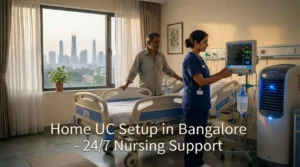
24-Hour vs 12-Hour Home Nursing: The Complete Guide for Bangalore Families 2026
One-Minute Read Summary
Choosing between 24-hour and 12-hour home nursing for your elderly loved one is one of the most critical decisions families in Bangalore face. This guide compares both options across cost, care quality, medical supervision, and practical outcomes helping you determine which model suits your parent’s health needs, your budget, and your family’s lifestyle. Read on to discover a simple decision-making framework used by hundreds of Bangalore families.
Introduction
Ramesh’s 78-year-old mother had a fall that left her temporarily immobilized. His siblings debated for weeks: Should we hire a nurse around-the-clock, or would part-time care be enough? The confusion cost them time and emotional energy they couldn’t afford to spend.
This scenario is incredibly common for families across Bangalore. As our city’s elderly population grows, more adult children are faced with making complex healthcare decisions for their parents.
The decision is made harder by rising healthcare costs and a lack of clear guidance, which can lead to choices that negatively impact health outcomes and family finances.
The post-COVID era has also normalized home-based senior care, making it a preferred option for many. This article is designed to give you a clear framework for comparing home nursing options. It’s for adult children, family decision-makers, and elderly individuals who want to maintain their independence.
By the end, you will be able to make an informed choice that aligns with your loved one’s needs and your family’s budget. Let’s break down these two care models so you can make the right choice.
Understanding Your Loved One’s Care Needs
Before comparing services, the first step is to honestly assess your loved one’s specific needs. This self-assessment will guide your decision between different in-home elderly care options and help you select the right senior citizen home nursing package.
Medical Condition Assessment
The intensity of care required often depends directly on the patient’s medical condition. Consider the following:
- Is your parent bedridden or facing significant mobility issues?
- Do they have a chronic disease requiring frequent monitoring, like diabetes, hypertension, or cardiac issues?
- Are they recovering from surgery or a recent hospitalization?
- Is there cognitive impairment, such as dementia or Alzheimer’s?
- Do they require palliative or end-of-life care?
- Is their medication schedule complex and time-sensitive?
As a general rule, if your parent has three or more of these conditions, 24-hour care is likely necessary. An insider tip from our 24+ years of experience: most families underestimate the need for nighttime supervision. Falls, medical emergencies, and agitation often occur after dark.
Daily Activity Assessment (ADL – Activities of Daily Living)
Next, evaluate their independence with Activities of Daily Living (ADLs):
- Bathing and personal hygiene
- Using the toilet and managing continence
- Dressing and undressing
- Eating and nutritional support
- Mobility and fall risk
If your parent needs full assistance with four or more of these ADLs, round-the-clock nursing is strongly recommended. A common mistake we see is families opting for part-time care to save money, only to face preventable emergencies during the uncovered hours.
Family Availability & Work Commitments
Finally, be realistic about your family’s ability to provide support.
- Can a family member be present during the day?
- Who will handle nighttime emergencies?
- What do the work schedules of the adult children look like?
- Is the primary family caregiver at risk of burnout?
Not all families can have someone at home all day, and that’s okay. This decision should be practical, not guilt-laden. Many families find a balance with a hybrid approach, combining 12-hour professional care with family presence during the day.
What Is 24-Hour Home Nursing Care?
Understanding the specifics of 24-hour home nursing services in Bangalore helps clarify what you’re paying for. It’s more than just having someone present; it’s about continuous, professional medical oversight.
Definition & Daily Scope
This model involves the continuous presence of trained nursing staff at your home. It ensures 24-hour medical supervision and emergency response capability. Care is typically managed in two or three shifts, with a critical overlap period where nurses exchange vital information about the patient’s status. This handover is a best practice that ensures seamless continuity of care. An insider tip: this brief overlap is crucial for communicating subtle changes in the patient’s condition that could signal a larger issue.
Medical & Care Services Typically Included
A 24-hour nursing plan is comprehensive. Services usually include:
- Vital signs monitoring (blood pressure, pulse, temperature, oxygen levels)
- Medication administration and meticulous tracking
- Wound care and dressing changes
- Catheter and urinary care management
- Feeding support, including tube feeding
- Assistance with mobility and repositioning to prevent bedsores
- Personal hygiene and care
- Emotional support and companionship
- Regular communication and updates for the family
It’s important to be transparent: 24-hour care does not include general housekeeping, cooking for the entire family, or laundry beyond patient-specific items.
Best-For Scenarios
24-hour nursing is essential for patients in specific situations:
- Post-acute hospitalization requiring intensive recovery
- Advanced dementia with a risk of wandering or agitation
- End-of-life palliative care
- Multiple chronic conditions that need frequent intervention
- Severe immobility with a high risk of falls
- Patients who need round-the-clock catheter or feeding tube management
What Is 12-Hour Home Nursing Care?
For many families, 12-hour home nursing offers a practical balance of professional support and family involvement. It’s a popular choice among senior citizen home nursing packages.
Definition & Typical Shift Structure
In this model, a nurse is present for 12 consecutive hours, typically during the day (e.g., 8 AM to 8 PM). Medical supervision is provided only during these shift hours. The remaining 12 hours, usually evening and overnight, are covered by family members or another informal caregiver.
This means there is no professional medical supervision during the uncovered period. An insider tip: most families choose a daytime shift, as managing medical needs and potential emergencies alone at night is more challenging.
Medical & Care Services Typically Included
Services are similar to the 24-hour model but confined to the shift duration:
- Morning and daytime vital signs monitoring
- Medication administration during shift hours
- Wound care and mobility exercises
- Assistance with bathing and hygiene
- Meal preparation and feeding support
- Companionship and emotional support
A key element of quality 12-hour nursing is family education. The nurse should train family members on how to safely manage the patient’s needs during unsupervised hours. Be aware that 12-hour nursing does not provide a professional nighttime emergency response; this responsibility falls to the family.
Best-For Scenarios
12-hour care works well in these situations:
- Early-stage recovery where the patient is steadily improving
- Chronic conditions that are stable and well-managed
- High-functioning elderly individuals who need part-time support
- Cases where a family member is consistently available for evening and nighttime backup
A common mistake to avoid is choosing this option for cost savings when the patient’s condition truly warrants round-the-clock supervision. This can create dangerous safety gaps.
24-Hour vs 12-Hour Home Nursing Bangalore: A Detailed Comparison
Making the right choice requires a direct comparison across key factors. Here’s a breakdown to help you evaluate the 24-hour vs 12-hour home nursing Bangalore options.
Coverage & Supervision
|
Dimension |
24-Hour Nursing |
12-Hour Nursing |
|---|---|---|
|
Medical Supervision |
Round-the-clock |
During shift hours only |
|
Nighttime Coverage |
Professional nurse |
Family/informal caregiver |
|
Emergency Response |
Immediate (trained staff onsite) |
Dependent on family |
|
Continuity of Care |
High (professional shift handovers) |
Moderate (requires family-nurse communication) |
Continuity gaps are where medical errors often happen. The structured handovers in 24-hour nursing minimize this risk significantly.
Patient Outcomes & Health Risks
|
Outcome |
24-Hour Nursing |
12-Hour Nursing |
|---|---|---|
|
Nighttime Fall Prevention |
Very High |
Moderate to High (depends on family) |
|
Medication Adherence |
Very High |
High (but with family responsibility) |
|
Early Complication Detection |
Immediate |
Delayed if an incident occurs overnight |
|
Hospital Readmission Rate |
Lower |
Higher due to supervision gaps |
|
Family Stress Level |
Lower |
Higher (nighttime responsibility) |
From our experience with over 3,500 families, we know the psychological toll of overnight caregiving is immense. 24-hour nursing greatly reduces caregiver burnout.
Cost Comparison
|
Cost Factor |
24-Hour Nursing |
12-Hour Nursing |
|---|---|---|
|
Base Monthly Cost (Bangalore) |
₹26,000 – ₹70,000+ |
₹13,000 – ₹35,000+ |
|
Hidden Costs |
Minimal |
Family may incur costs for backup care |
Spandhana Public Trust is proud to offer competitive and affordable elderly home care packages, often priced below market rates while upholding the highest quality standards. The “true cost” of 24-hour care is often lower when you factor in the prevention of emergency room visits, which can cost anywhere from ₹50,000 to ₹150,000 per incident.
Explore More On: How Much Does Home Nursing Cost in Bangalore 2026 — Complete Price Guide
Family Involvement & Independence
|
Factor |
24-Hour Nursing |
12-Hour Nursing |
|---|---|---|
|
Family Presence Required |
Limited (focus on emotional support) |
Essential (covers care gaps) |
|
Work-Life Balance for Adult Children |
Excellent |
Challenging (nighttime duties) |
The best care model allows family to focus on their emotional connection with their loved one, while trained professionals handle the demanding medical tasks.
Real Examples & Case Studies
Theory is one thing; real life is another. Here are a few anonymized scenarios based on families we’ve served.
The Recovering Patient Model (12-Hour Success)
Meera, 72, was recovering from hip replacement surgery. Her daughter worked nearby and could be home by 6 PM. The family chose 12-hour daytime nursing. The nurse managed wound care, mobility exercises, and medications, training the family for evening duties. Meera recovered fully in four months, and the shared responsibility strengthened family bonds. This shows that when recovery is time-bound and family is available, 12-hour care can be a perfect fit.
The Advanced Dementia Model (24-Hour Necessity)
Rajesh, 82, had advanced Alzheimer’s and began wandering at night. After he left the house at 3 AM one morning, his overwhelmed family realized nighttime supervision was non-negotiable. They switched to 24-hour nursing care for the elderly. This allowed Rajesh to remain safely at home, and his family’s stress levels dropped dramatically. For advanced cognitive decline, 24-hour care prevents both patient harm and family burnout.
Pricing & Budget Realities
Let’s talk about the actual numbers for professional home caregiving in Bangalore.
Cost Breakdown
- 24-Hour Nursing (Bangalore Average): Ranges from ₹26,000/month for a trained assistant to ₹70,000+/month for a senior nurse providing specialized care.
- 12-Hour Nursing (Bangalore Average): Ranges from ₹13,000/month to ₹35,000+/month.
Prices vary based on the nurse’s qualifications, the patient’s medical complexity, and specific needs like dementia care. At Spandhana Public Trust, we provide certified, experienced staff at prices often below the market average. When getting a quote, always ask: What’s included? What’s extra? Is there a backup nurse plan?
Hidden Costs to Budget For
With a 12-hour model, you must also budget for medical supplies, emergency transport, and potentially a helper for other tasks. The true cost of 12-hour care, when combined with family stress and potential emergency visits, can often approach the cost of 24-hour care over time.
Decision-Making Framework
Choosing the right home nursing care model is a big decision that impacts both your loved one’s well-being and your family’s peace of mind. Here’s a practical, step-by-step guide to help you make an informed choice between 24-hour and 12-hour home nursing care, tailored for families in Bangalore.
Step 1: Medical Assessment
Start by meeting your loved one’s primary doctor. Ask direct questions about your parent’s condition:
- Does their health require round-the-clock professional care, or could part-time support be enough?
- Get a written summary detailing mobility, mental status, chronic illnesses, and medication requirements.
Expert tip: Don’t rely only on family opinions for this stage. Clinical evaluation is essential—many families regret skipping it when problems arise later.
Step 2: Family Capability & Availability
Be honest about who can actually be at home, especially at night.
- Can family members manage overnight emergencies?
- What’s the risk of caregiver burnout?
- Factor in everyone’s work schedules, energy levels, and your financial reality.
If your family is always available, 12-hour care may suffice. If coverage is spotty or your parent’s needs are complex, lean toward 24-hour nursing.
Step 3: Trial Period
If the patient’s health is stable, consider starting with 12-hour nursing for a short trial. Monitor how safe and supported your parent feels and whether your family can handle the gaps—keep track of any issues, stress, or unexpected incidents.
- After 2-4 weeks, review and upgrade to 24-hour care if problems arise.
- Remember: many families start with part-time support and realize they need more after living the experience.
Step 4: Get Professional Input
Consult 2-3 reputable home nursing services in Bangalore (like Spandhana). Request in-home assessments and written recommendations.
- Compare the advice you receive—experienced providers may suggest different approaches based on what they see.
- Spandhana’s nursing team can visit your home, assess needs, and recommend the most suitable care model for your parent free of charge.
Step 5: Make Your Family Decision & Set a Timeline
Document your decision-making: What did you choose and why? Share the plan with all key people—your parent, siblings, the doctor, and your nursing provider.
- Set a review date: “Let’s re-evaluate in three months.”
- Stay flexible; your loved one’s needs may evolve over time.
Family insight: The best results come when everyone involved understands the reasons behind your choice—this prevents miscommunication and eases the transition.
Read MORE oN : Top Patient Care Taker Services in Bangalore – Spandhana Public Trust
FAQs – Common Questions About Home Nursing in Bangalore
1. What qualifications should I look for in a home nurse?
When choosing a nurse from the best home nursing providers Bangalore has to offer, look for a Registered Nurse (RN) or a certified Nursing Assistant with at least 2-3 years of home care experience. Important credentials include CPR/BLS certification and a background check. If your loved one has dementia or special medical needs, ask for additional training certifications. At Spandhana, all our nurses are certified and vetted with a minimum 3 years of experience to ensure your family receives professional and trustworthy home nursing services Bangalore-wide.
2. Can I switch from 12-hour to 24-hour nursing mid-way?
Yes, you can easily shift care plans through reputable home nursing services Bangalore families trust. It’s common to start with 12-hour care and upgrade to 24-hour nursing if your loved one’s condition changes or safety gaps emerge. Agencies like Spandhana will help arrange the transition—often with no penalty and, wherever possible, with the same nurse for continuity. Flexibility in care is one reason so many choose experienced home nursing providers.
3. What if I’m not satisfied with the assigned nurse?
You have every right to ask the agency for a substitute. The best home nursing providers in Bangalore, including Spandhana, keep backup staff and encourage honest feedback, so you can request a same-day replacement if needed. Compatibility is important; don’t hesitate to try different nurses until you find the right match for your parent’s needs and personality.
4. How can I check if quality care is provided when I’m not there?
Choose home nursing services Bangalore families recommend for their transparency practices. Keep a daily log with the nurse, schedule surprise visits, and check on changes in your parent’s condition. Regular phone calls or video chats, monthly meetings with the nursing provider, and watching for improvements (or issues) in your loved one’s health can provide peace of mind. Experienced agencies like Spandhana encourage ongoing communication and family involvement.
5. What’s the cost difference between hiring a nurse directly and going through an agency?
Direct hiring may seem cheaper (saving ₹5,000–₹10,000 per month), but it comes with greater risk—you’re responsible for taxes, monitoring, and fast replacements. Home nursing services Bangalore agencies handle everything: compliance, vetting, continuity, and legal cover. For first-time or long-term care, agency support is a safer and more reliable choice. With Spandhana, you benefit from complete backup and peace of mind.
Read More Here: A Complete Guide to Hiring a Home Nurse in Bangalore
6. Can insurance or government schemes help with the cost?
Many health insurance policies reimburse 50–80% of medically necessary home nursing when prescribed by a doctor. Government programs and senior citizen schemes may apply depending on your situation. Tax benefits are sometimes available too. Spandhana, one of the best home nursing providers Bangalore offers, guides you through insurance paperwork and ensures all documentation is in place for successful claims. Always check with your insurer and ask your agency for assistance in navigating available options.
More Questions In Mind? Explore Here: 21 Questions to Ask Before Selecting an Elder Care Home in Bangalore
Next Steps – How to Get Started
If you’ve decided on exploring home nursing, here are your immediate actions:
- Schedule a Doctor’s Appointment: Get a written assessment of your parent’s care needs.
- Contact Reputable Agencies: Reach out to 2-3 providers, including Spandhana Public Trust, to request a free in-home assessment.
- Prepare Your Home: Assess your home for accessibility and make arrangements for the nurse’s space.
Making the final decision on the 24-hour vs 12-hour home nursing Bangalore dilemma is a significant step. Let us help you navigate it with confidence.
Ready to explore the best home nursing option for your loved one?
Spandhana Public Trust has been a leading home care provider in Bangalore since 2001, serving over 3,500 satisfied families. We offer:
- A free, no-obligation in-home assessment.
- Certified nursing staff with 3+ years of home care experience.
- Pricing below market rates without compromising on quality.
- 24-hour emergency support and backup nurse availability.
- Personalized care plans tailored to your parent’s needs.
Call us today at 09845803616 or request a free assessment online to find the peace of mind your family deserves.